

SpinUp: tiny buy-in, ugly multipliers
Small buy-in, random prize pool multiplier before the first hand. Three seats. Zero patience required.
MoreRoom news, formats, cashouts, and strategy — without the brochure voice.
Small buy-in, random prize pool multiplier before the first hand. Three seats. Zero patience required.
More
Direct cash, licensed room, funds kept separate. Here’s how money actually leaves — without the fairy tale.
More
First live session? Don’t slowroll, don’t coach mid-hand, don’t be that guy. Short rules, fewer dirty looks.
More
Small buy-ins, real prizes, less drama for the bankroll. How to play micros without donating every night.
More
Won a chunk? Cool. Here’s what to do with it before the next heater story eats the stack.
More
Game Theory Optimal in plain talk — what it is, when it matters, and how to use it at NUTS POKER without cosplaying a solver.
More
All-in or Fold — two buttons, no middle game. Ranges, spots, and how not to spew in AoF.
More
Auto club rakeback up to 70%. Start after 2 members; hit 20 actives and the share climbs. No motivational poster required.
More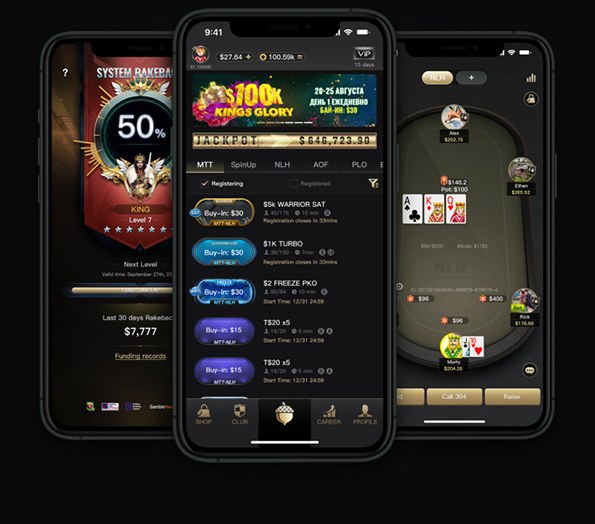
Real-money poker wherever you open the app. No sermon. Tables when you want them.
More
New Hand Review on NUTS POKER — open the hand, see what actually happened, stop arguing from memory.
More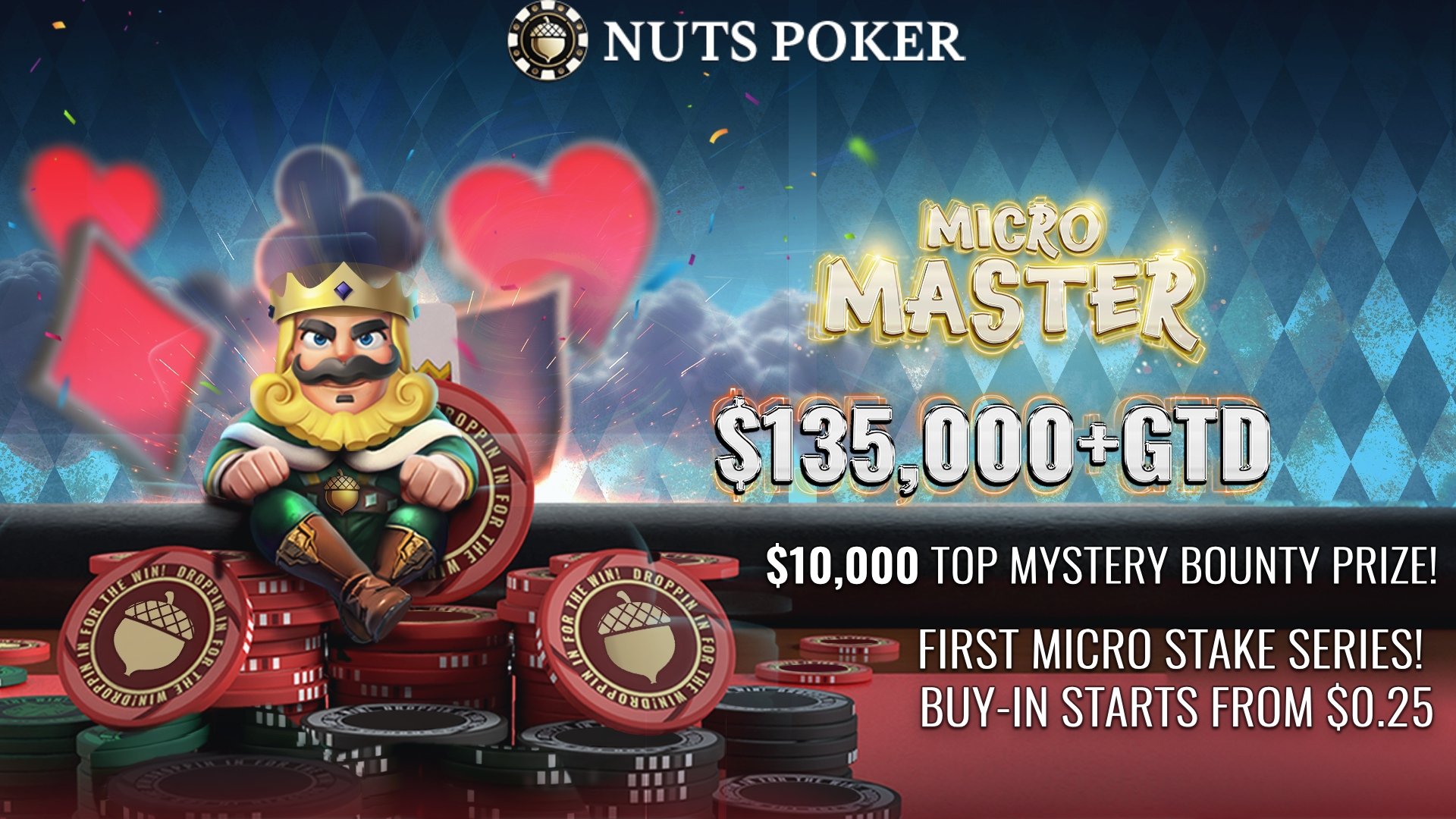
Buy-in from $0.25. Prize pool over $135,000. Small stack, loud series — first MICRO MASTER on NUTS POKER.
More
iOS, Android, Windows, browser. Soft that doesn’t feel like 2012. Ecosystem with tables, drops, and noise.
More
Predict the hand and chase up to 242x. Fast format, loud pots — KKClash on NUTS POKER.
More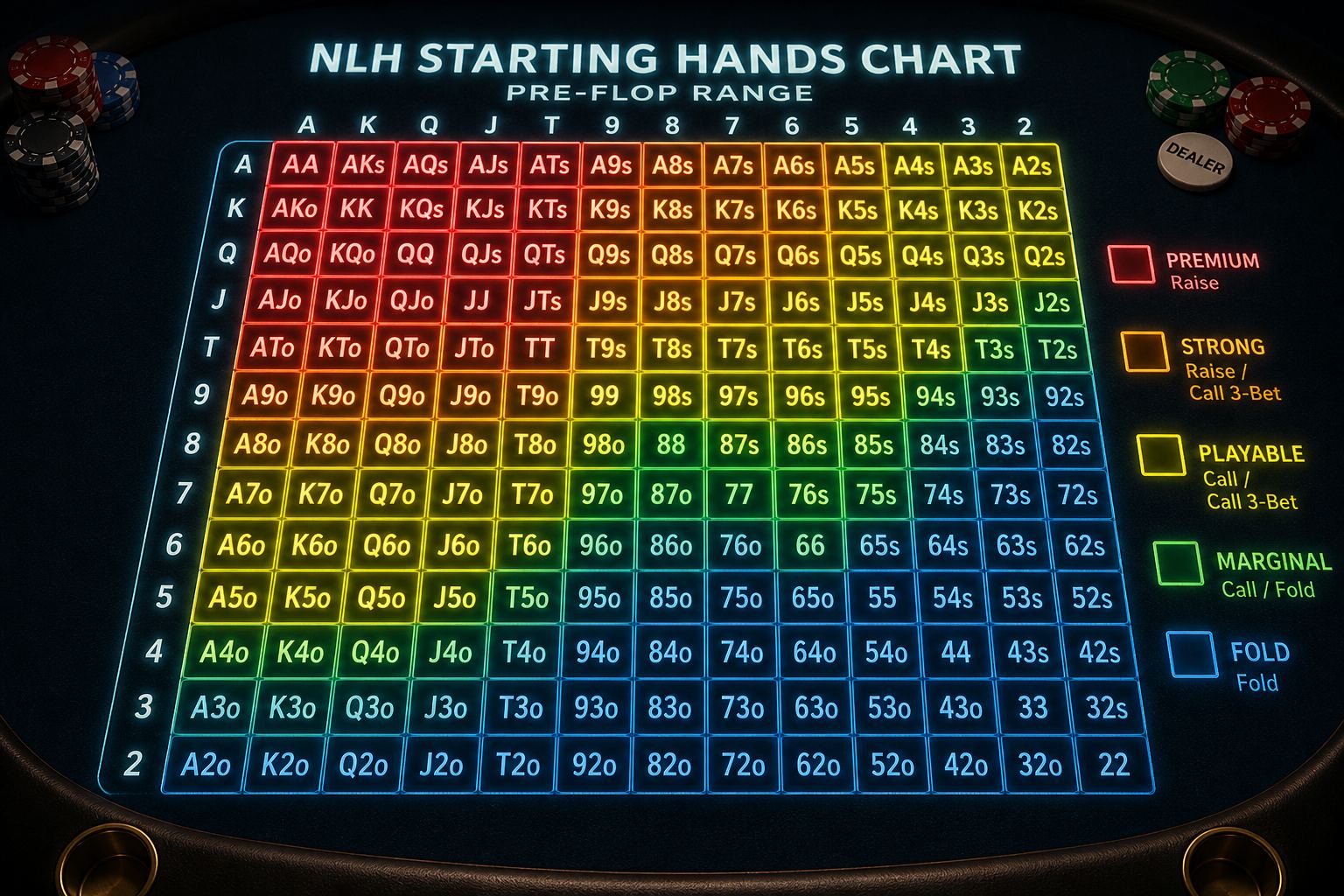
Preflop range charts for No-Limit Hold'em cash, read by position — and the exact moment you're supposed to stop trusting them.
More
Bankroll rules for micro NLH cash that actually survive a bad week — buy-in counts, move-up triggers, and the one habit that saves rolls.
More
A real-style NLH cash hand review — why a 3-bet, three streets of pressure, and one fold at the end is math, not machismo.
More
Two house experts argue tight-aggressive vs loose-aggressive NLH cash — nobody wins the debate, both of them win the sessions.
More
How seat position changes NLH cash decisions street by street — early, middle, late, and the blinds nobody wants to defend.
More
Early, middle, bubble, late, and final table — what actually changes at every MTT stage, and the mistake that carries between all of them.
More
Independent Chip Model in plain talk — why the same top pair is a snap-call on Tuesday's cash game and a fold on Sunday's bubble.
More
A final-table hand replayed street by street — how a chip leader's pressure and a short stack's fold both play correctly at the same time.
More
Two house experts watch the same final-table hand and reach opposite verdicts on the fold. Neither one is wrong.
More
Progressive knockout bounty math in plain talk — why calling off wider for the bounty is sometimes correct, and where that logic quietly breaks.
More
Three seats, no room for error — push-fold ranges built for SpinUp's compact format, not borrowed from full-ring MTTs.
More
The random prize pool multiplier is information, not a promise — how to read it without letting it rewrite your strategy for the worse.
More
SpinUp's variance runs higher than a standard tournament — the buy-in math that keeps one x100,000 miss from wiping out a normal week.
More
A hand review of a locked-in six-figure multiplier — what actually changed at the table, and what stayed exactly the same as any other SpinUp shove.
More
Two house experts argue whether hunting big SpinUp multipliers is a real edge or just an expensive hobby dressed up as one.
More
All-in or Fold reduces poker to two buttons — the ranges attached to each button change fast, and most of the skill lives in tracking that change.
More
Standard tournament ICM gives you time to adjust across streets. AOF collapses that same pressure into a single all-in decision with nothing to hide behind.
More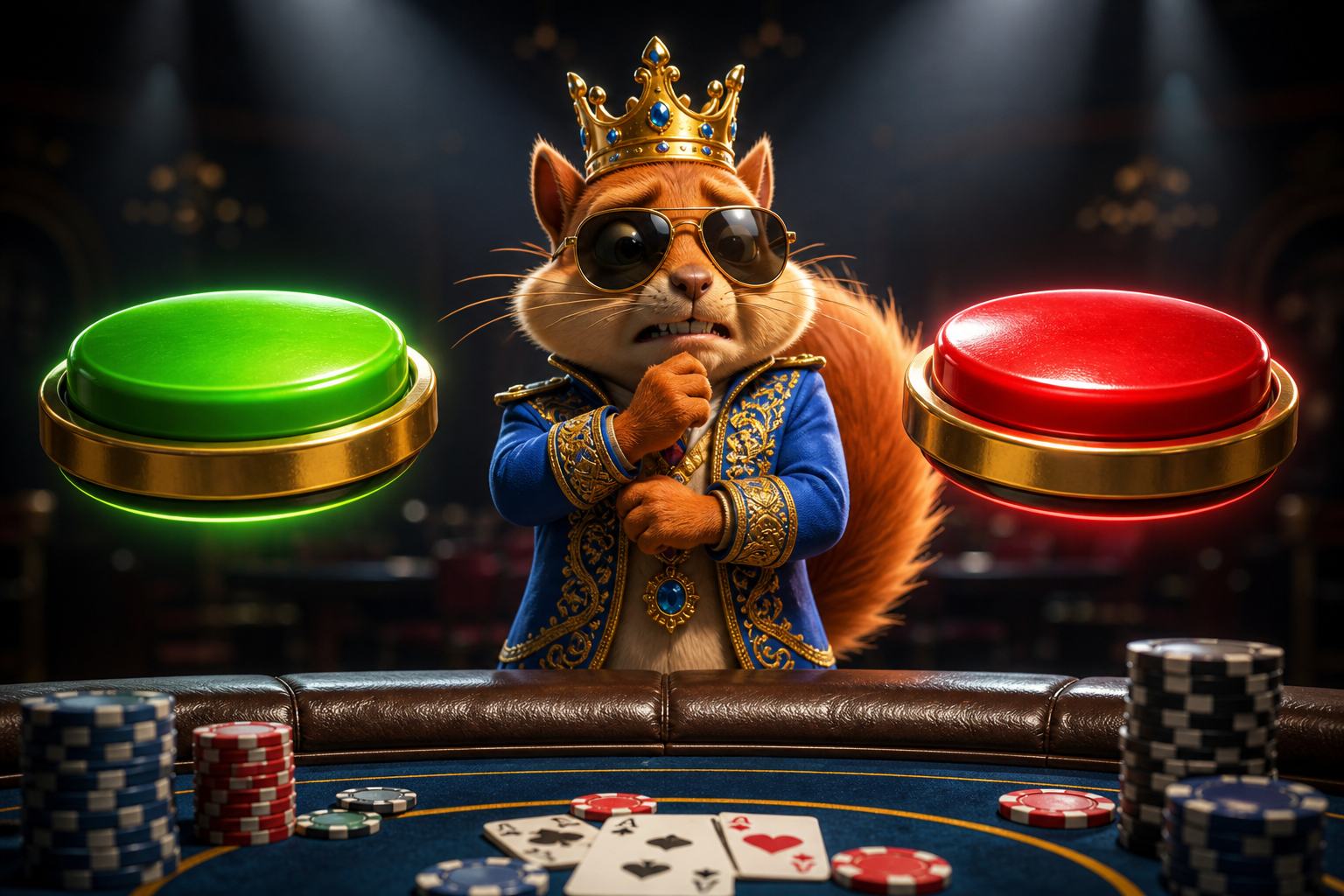
One AOF spot at a shallow stack, replayed decision by decision — why the fold was correct before anyone ever saw the villain's cards.
More
No post-flop play to smooth out the swings — AOF's variance is faster and rougher than a standard tournament, and the bankroll math has to match it.
More
Two house experts argue whether a two-button format leaves any room for skill, or whether the ranges just decorate a very expensive coin toss.
More
Four cards instead of two doesn't sound like much until it rewires every instinct you brought over from Hold'em — here's what actually breaks first.
More
PLO wraps and combo draws produce out-counts that look impossible under time pressure — a fast mental shortcut that gets you close enough, fast enough.
More
Bigger pots, more equity swings, more all-in coolers that were actually close on paper — PLO's variance profile behaves more like a casino game than most…
More
A set on a wet PLO flop gets folded to a wrap — the equity math behind a hand review that looks insane at first glance and correct by the river.
More
Same four cards, same flop, two completely different lines — and both experts insist the other one just got lucky.
More
Open-Face Chinese explained properly — three rows, a foul that costs everything, royalty bonuses, and the fantasy mechanic that keeps people coming back.
More
Royalty tables turn hand strength into real points — and playing too conservatively to avoid a foul quietly bleeds more points than most players ever notice.
More
Fantasy land looks like a reward for a strong top row. Half the players who reach it play the follow-up hand worse than a regular one — here's why, and how not…
More
A full-information fantasy hand, replayed row by row — why the safest-looking arrangement lost, and where the actual mistake was buried three cards earlier.
More
Two house experts argue over whether OFC even counts as the same game as Hold'em — and whether skills actually transfer between them at all.
More
No lobby, no seat wait, no watching a table fill up — FlashPoker throws you into the next hand the second the last one ends, and that changes more than just…
More
Range charts assume time to think. FlashPoker takes that time away — so the correct opening ranges shift toward simplicity, not just tightness.
More
More hands per hour means more variance per hour — the bankroll math for a format that never makes you wait between decisions has to account for volume nobody…
More
A hand folded in under two seconds — the replay of a decision that had to outrun the adrenaline of a format that never lets you sit with a hand.
More
Two house experts argue about where the line sits between playing fast and playing recklessly — and whether Rashad's speed is actually a skill or a stress test…
More
Shark, King, side pots, and the King-heavy combos that pay up to 242x — how KKClash's odds table actually works underneath the beach lobby theme.
More
The chase for a big multiplier without a bankroll plan is exactly how a fun side game turns into a real loss — the math for staking it correctly.
More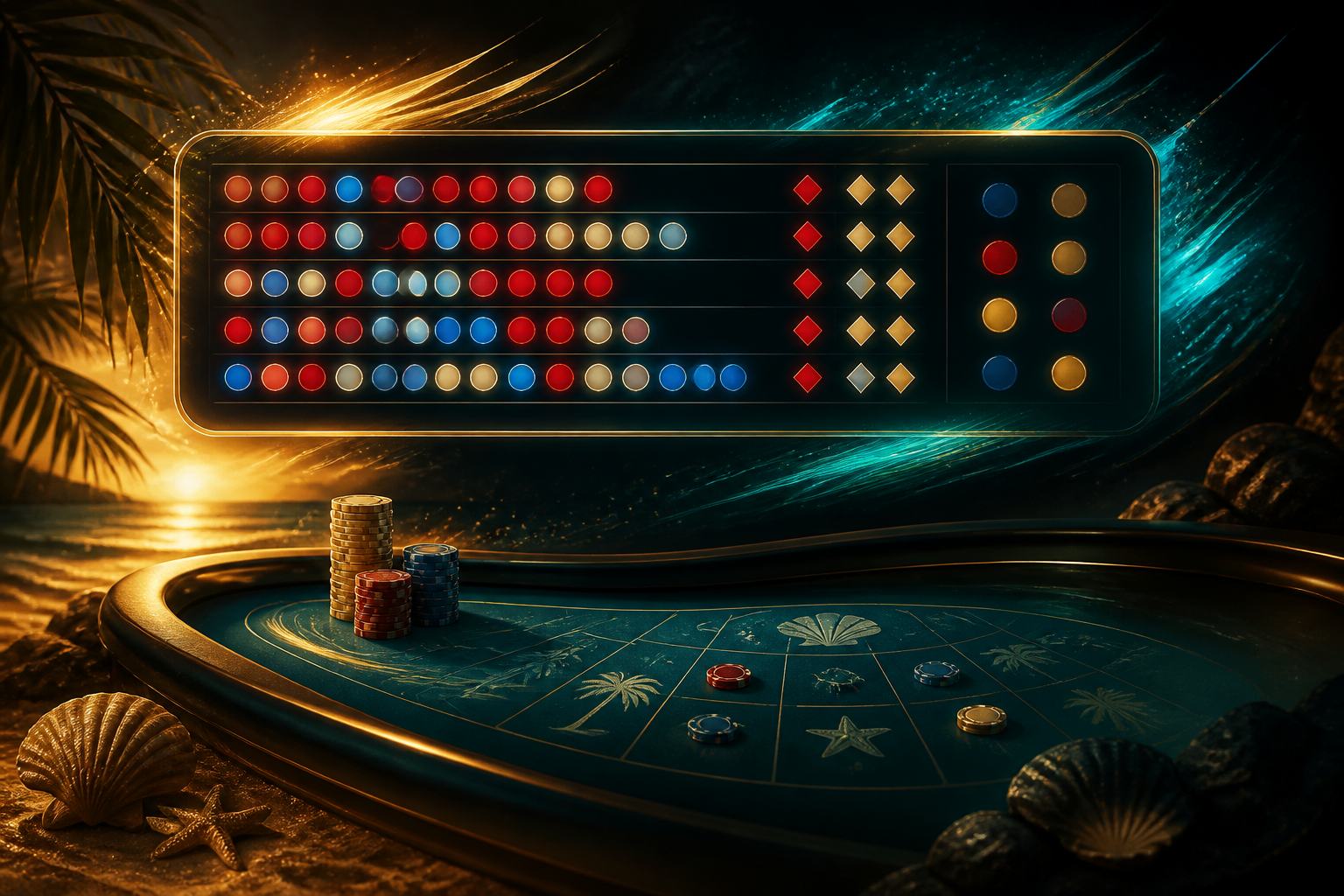
The Big Road tracker fills up with streaks that look meaningful — a hand review of exactly what those streaks are, and what they aren't.
More
Low, mid, and high chip levels change more than the size of the bet — a look at how stake level and King-combo hunting should actually be matched.
More
Two house experts argue over whether KKClash belongs in the same conversation as real poker, or whether calling it that is doing the game a disservice.
More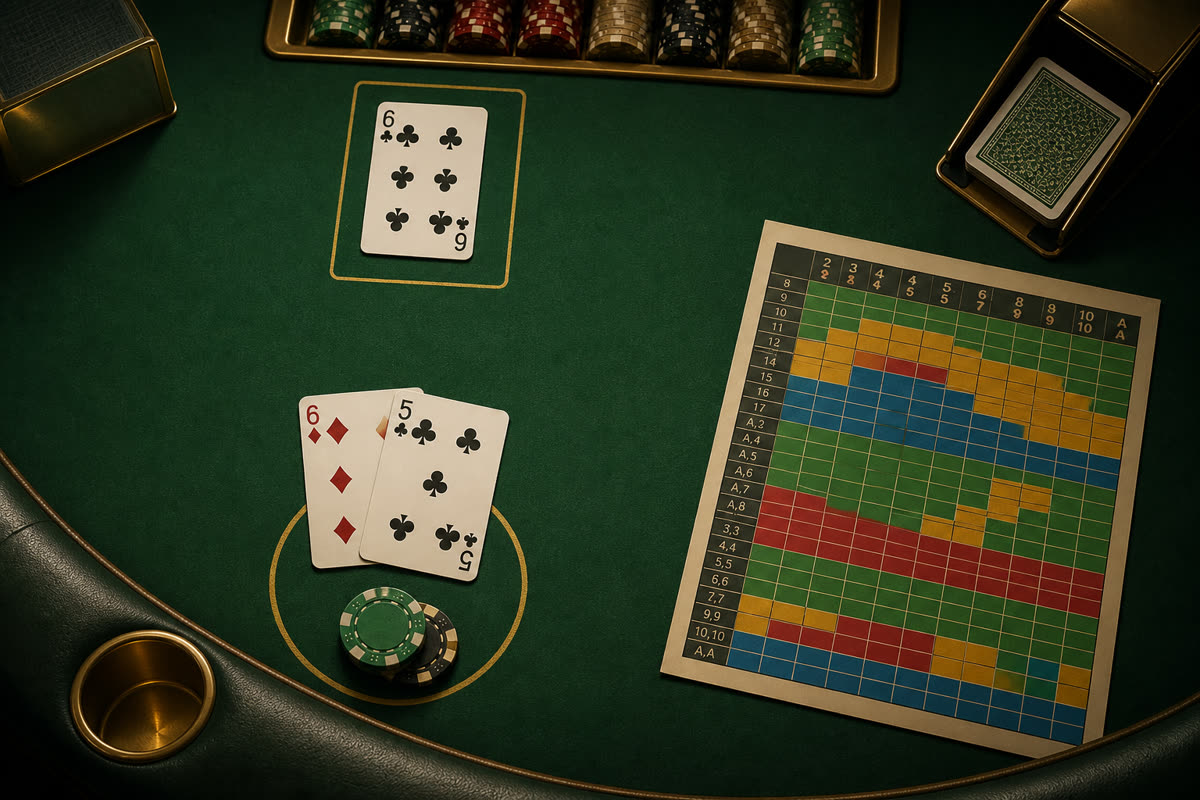
Hard totals, soft hands, and pairs — the exact hit/stand/double/split rules that cut house edge to roughly half a percent when you follow them every hand.
More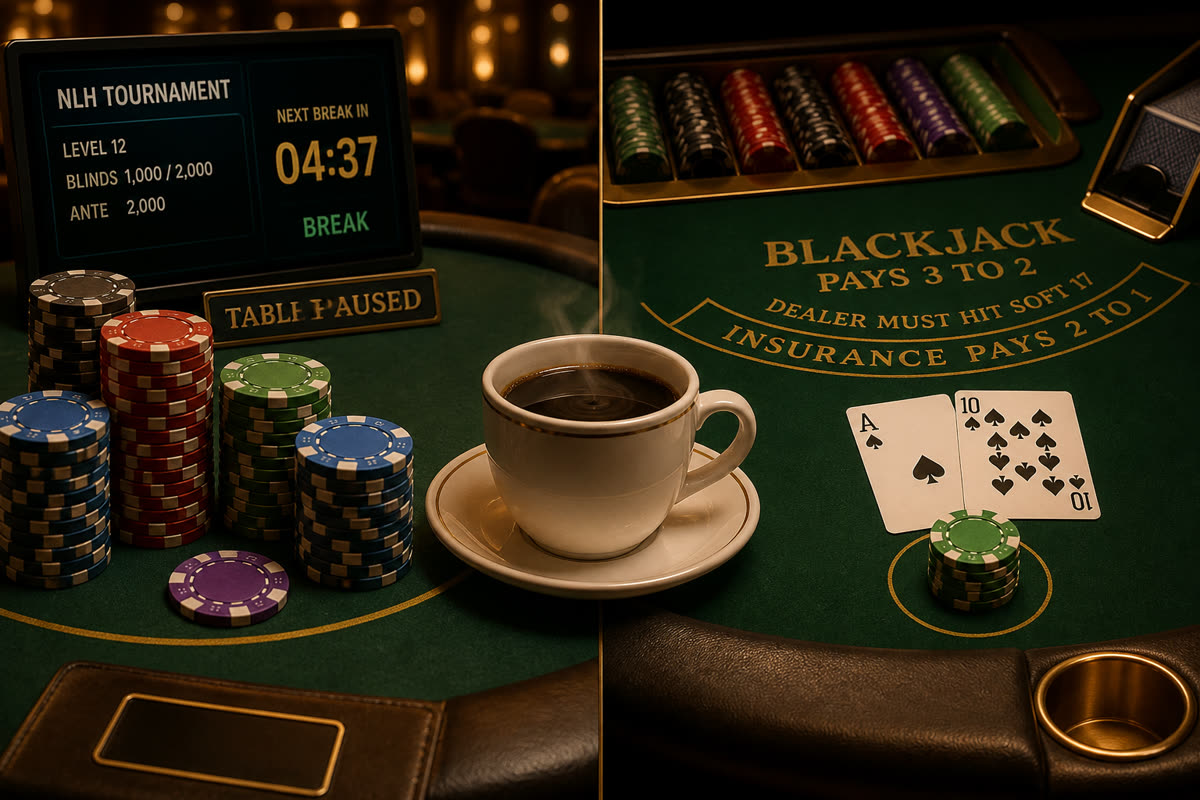
A timed blackjack cooldown between MTT or cash blocks — stake caps, stop rules, and why «just a few hands» is how poker bankrolls quietly die.
More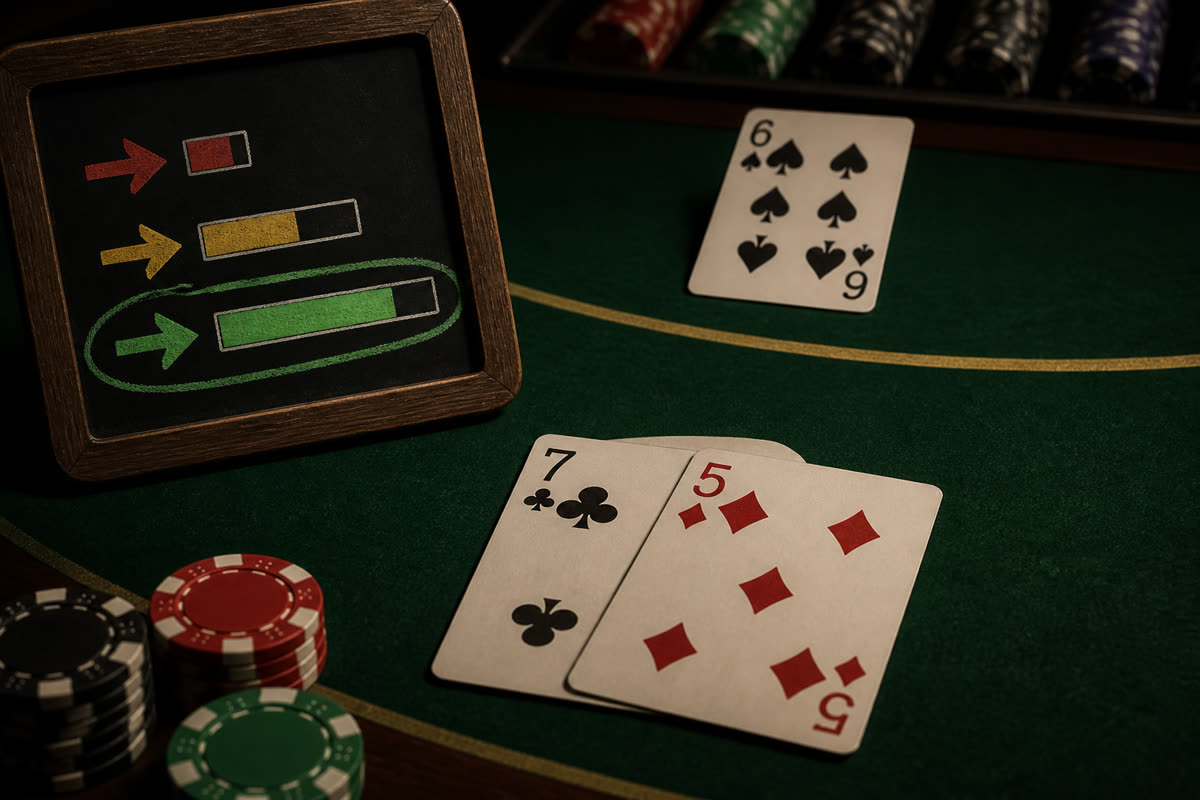
A full hand review when the dealer's upcard is 6 — standing ranges, double windows, and the bust probability that makes 12–16 profitable stands.
More
Ante, buy-the-game, and exchange costs — the full betting flow of Russian Poker explained with numbers so you know what each click costs before you click it.
More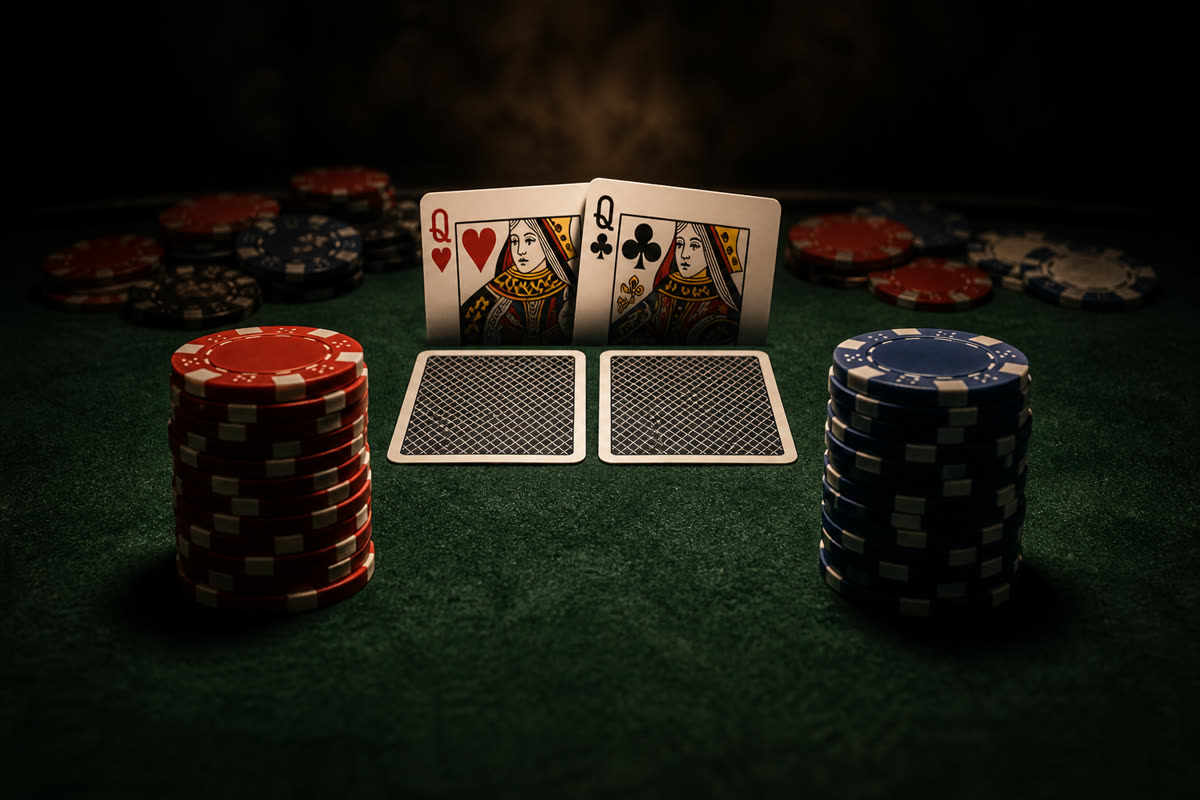
Threshold hands, exchange EV, and dealer qualify rates — a decision framework for folding early vs paying 1 ante to swap cards.
More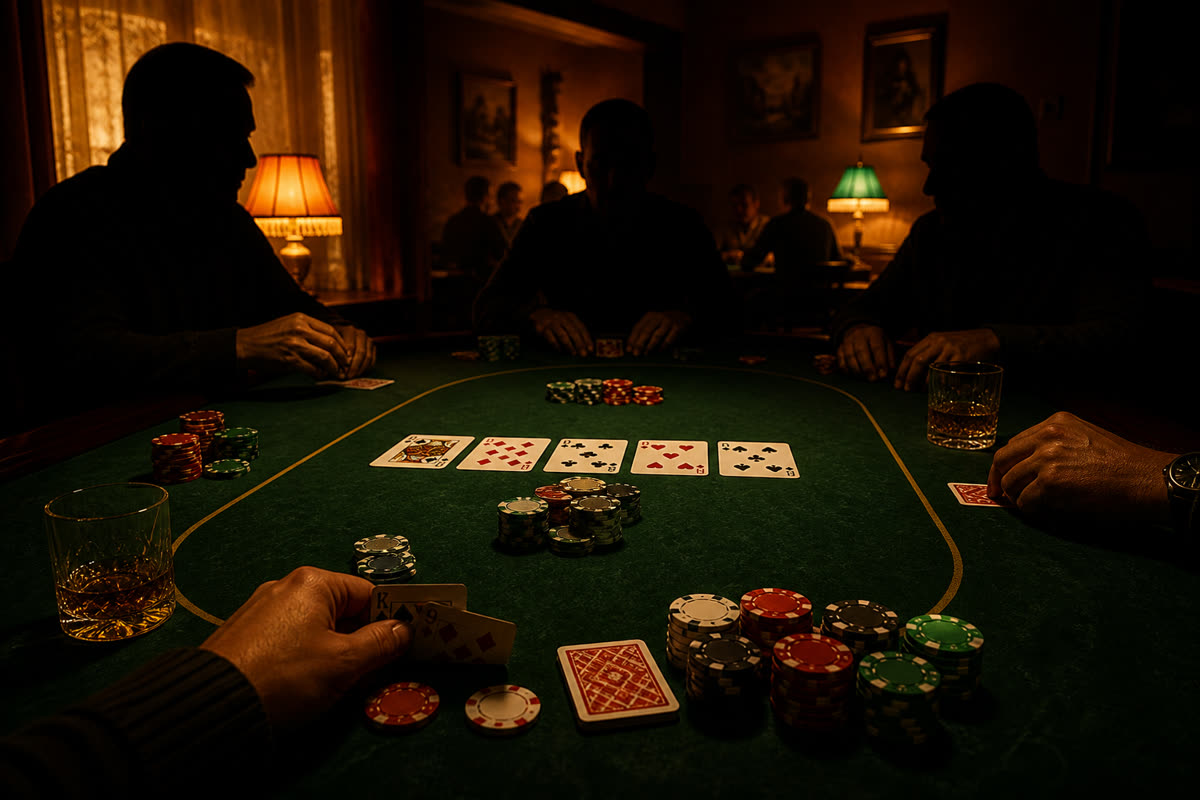
Fast rounds, familiar ace-king logic, and table culture — why Russian Poker hits different for regional players than another Hold'em clone.
More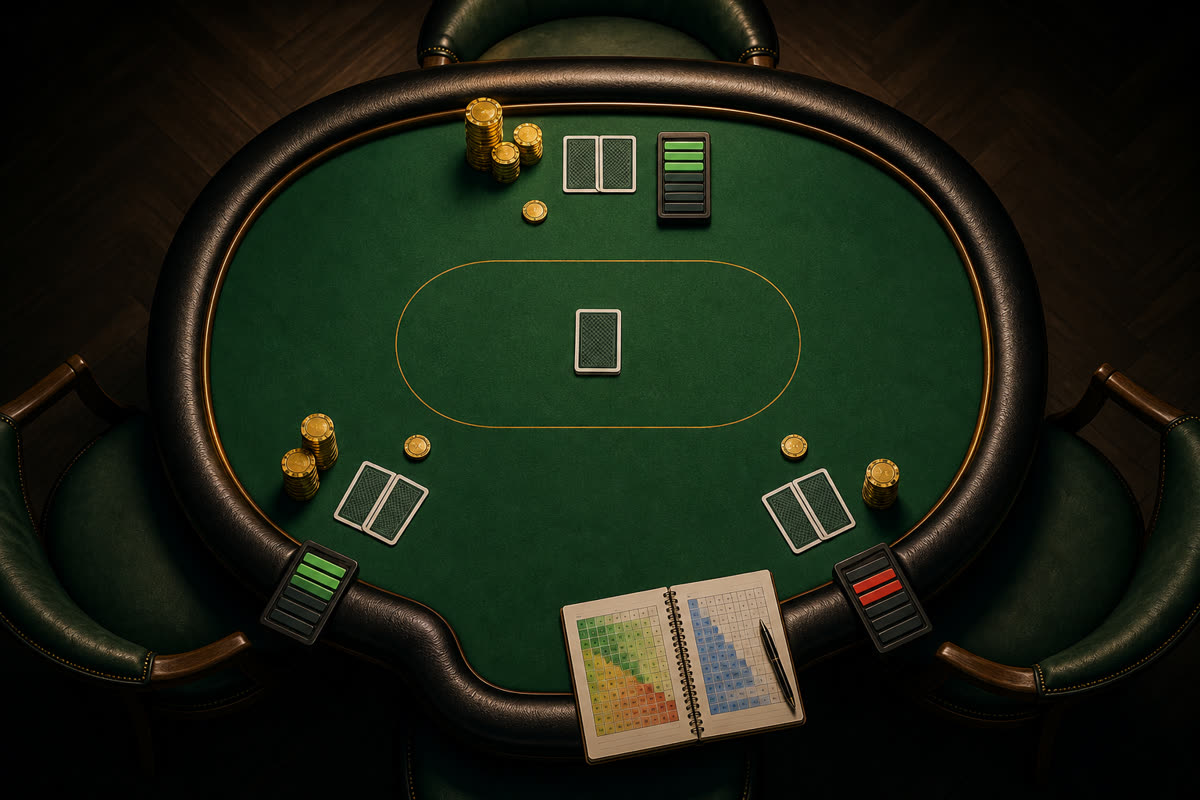
Structured reps, decision density, and bankroll-safe volume — why single-table SNGs remain deliberate practice even when your main game is MTT or high-stakes…
More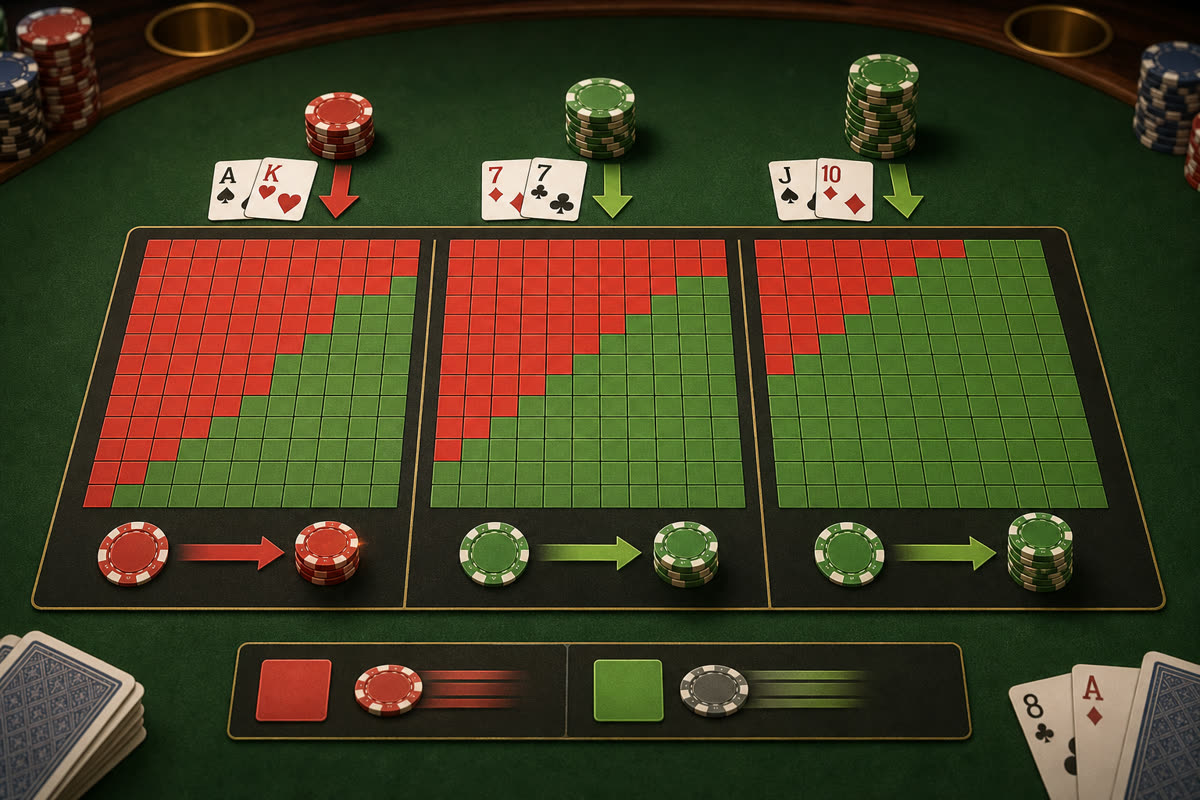
Ten big blinds and under — position-colored shove/fold matrices, ante adjustments, and the arithmetic that replaces panic jams at the bubble.
More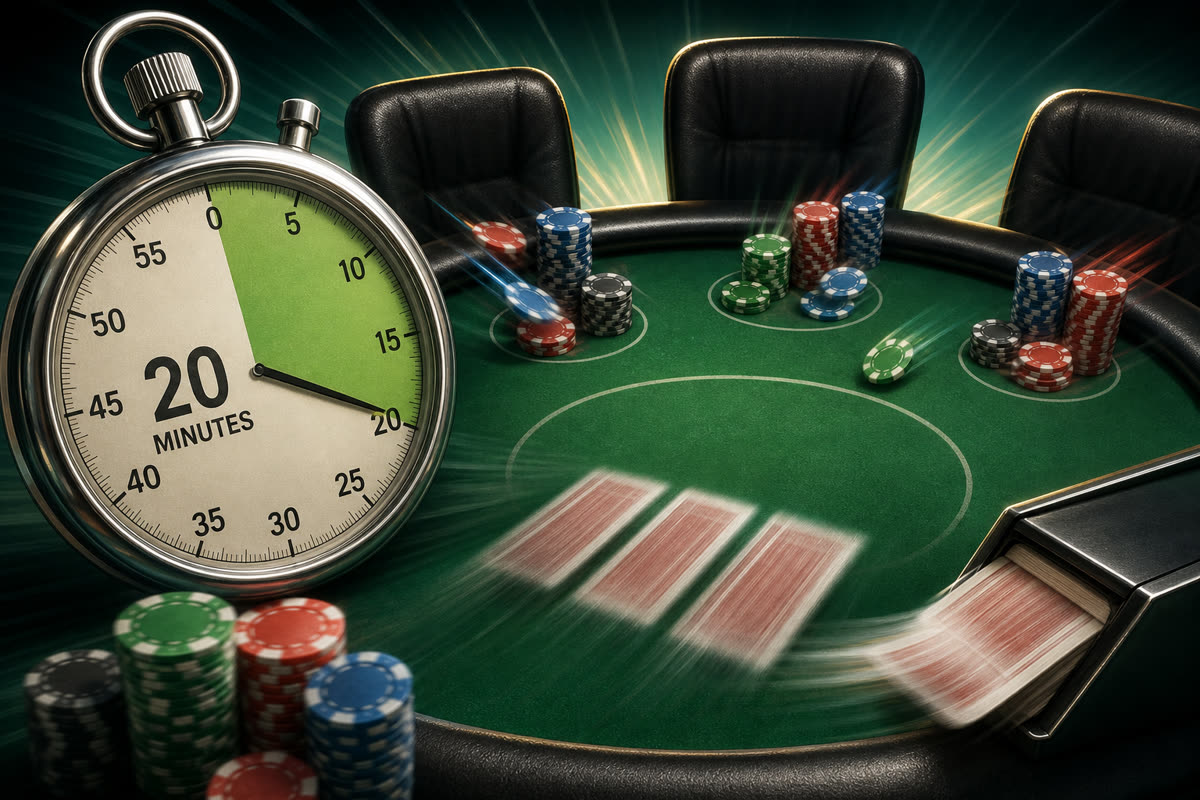
One turbo, one stake, hard clock — the speed protocol that gets you reps without the «one more SNG» spiral eating your poker block.
More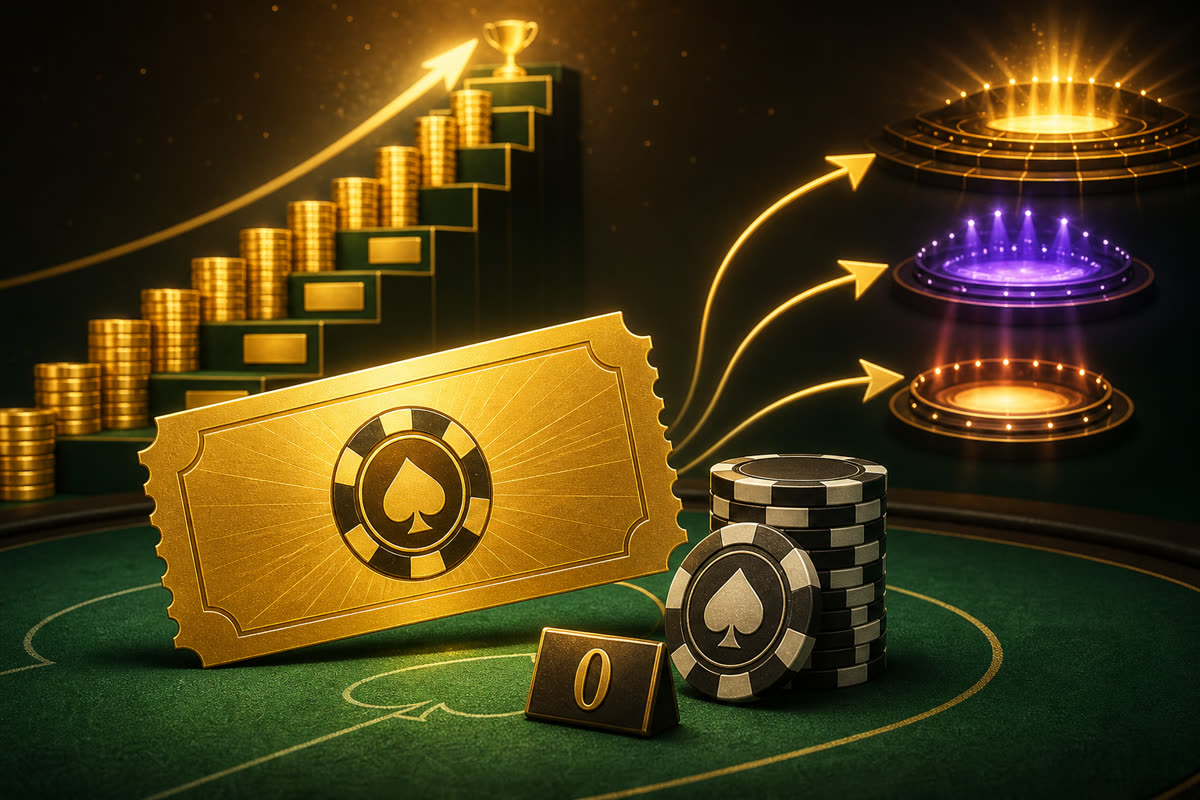
Mission routing, satellite ladders, and ledger math on $0 buy-ins — how to convert daily freerolls into real bankroll units without treating them like infinite…
More
Soft fields, manic callers, brutal bubbles — why $0 entries are the cheapest lab for push/fold discipline and tournament patience if you stop playing them like…
More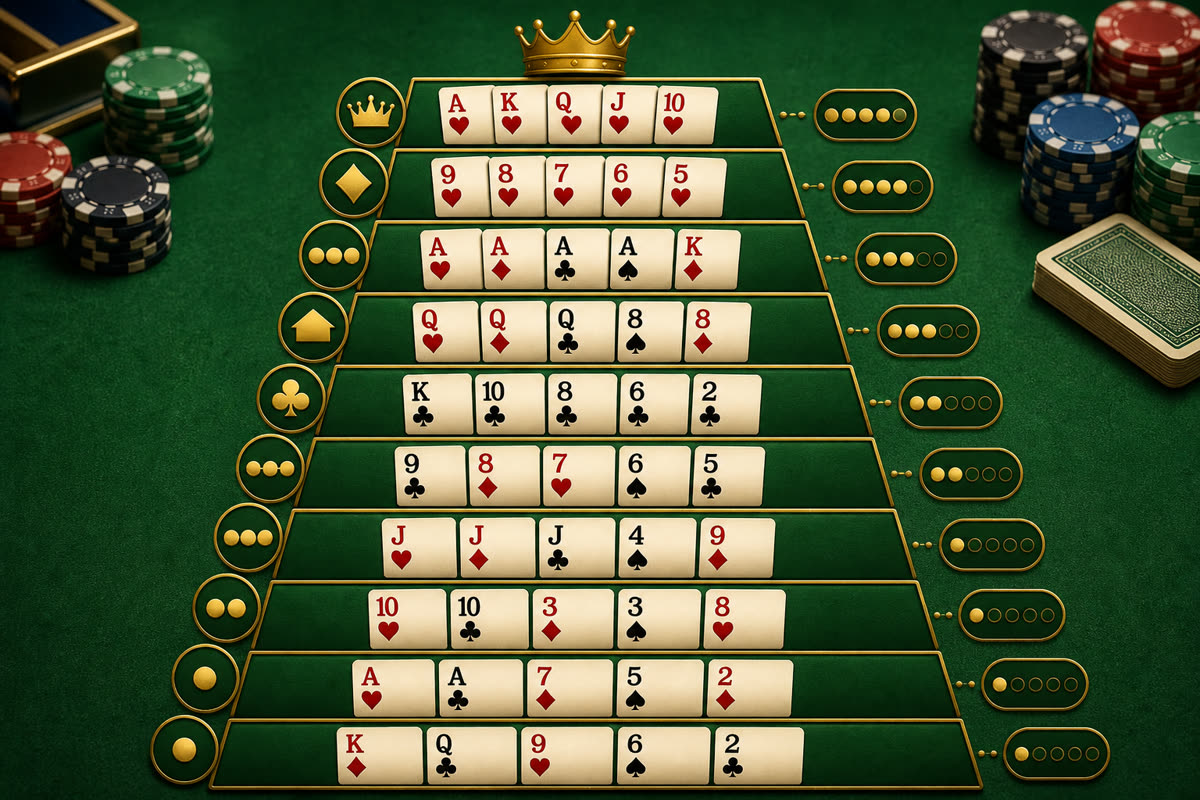
From high card to royal flush — exact combo counts, percentage odds, and the arithmetic that replaces guessing whether your draw is «due» at the table.
More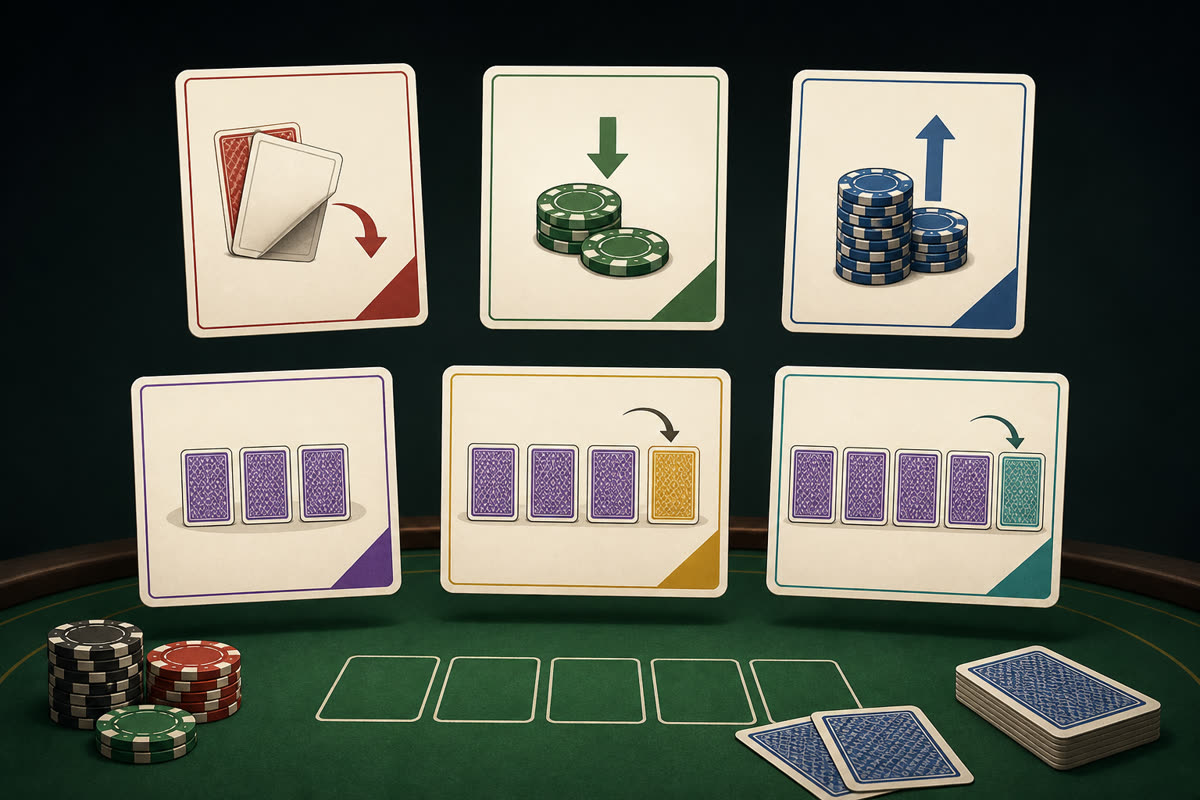
EV, MDF, blockers, SPR — a working dictionary tied to decisions at the table, not forum alphabet soup you forget before the next blind level.
More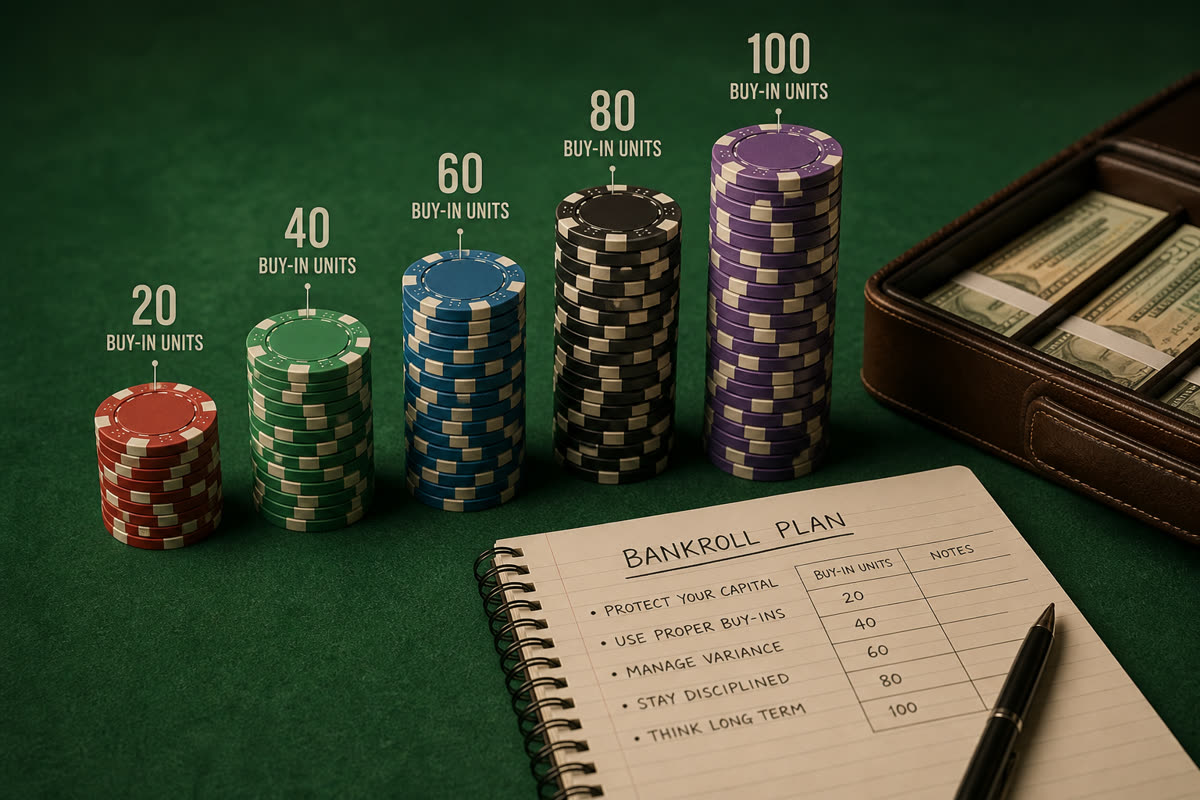
Cash, MTT, SNG — stake-specific multiples, risk of ruin math, and why «I feel comfortable» is not a bankroll rule when variance has a longer memory than your…
More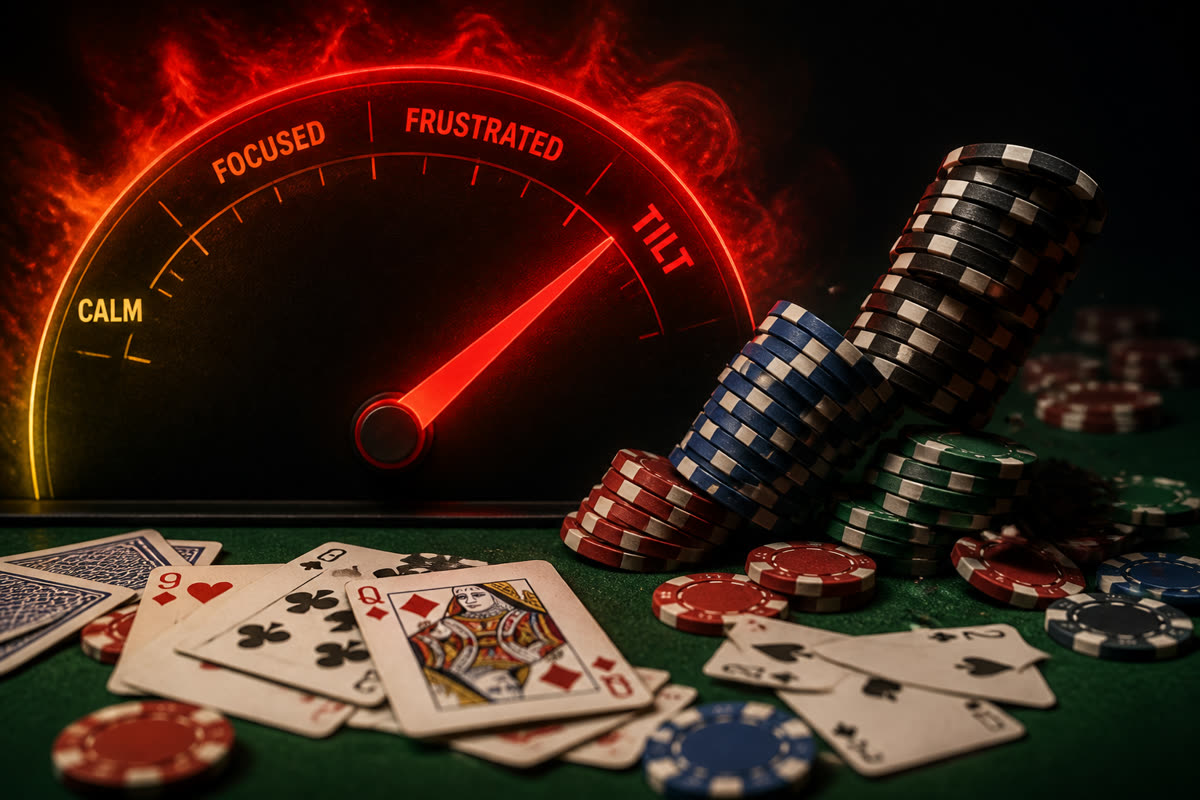
Early warning signs, the three-hand audit, and exit rails that stop «just one more orbit» from becoming your most expensive session of the month.
More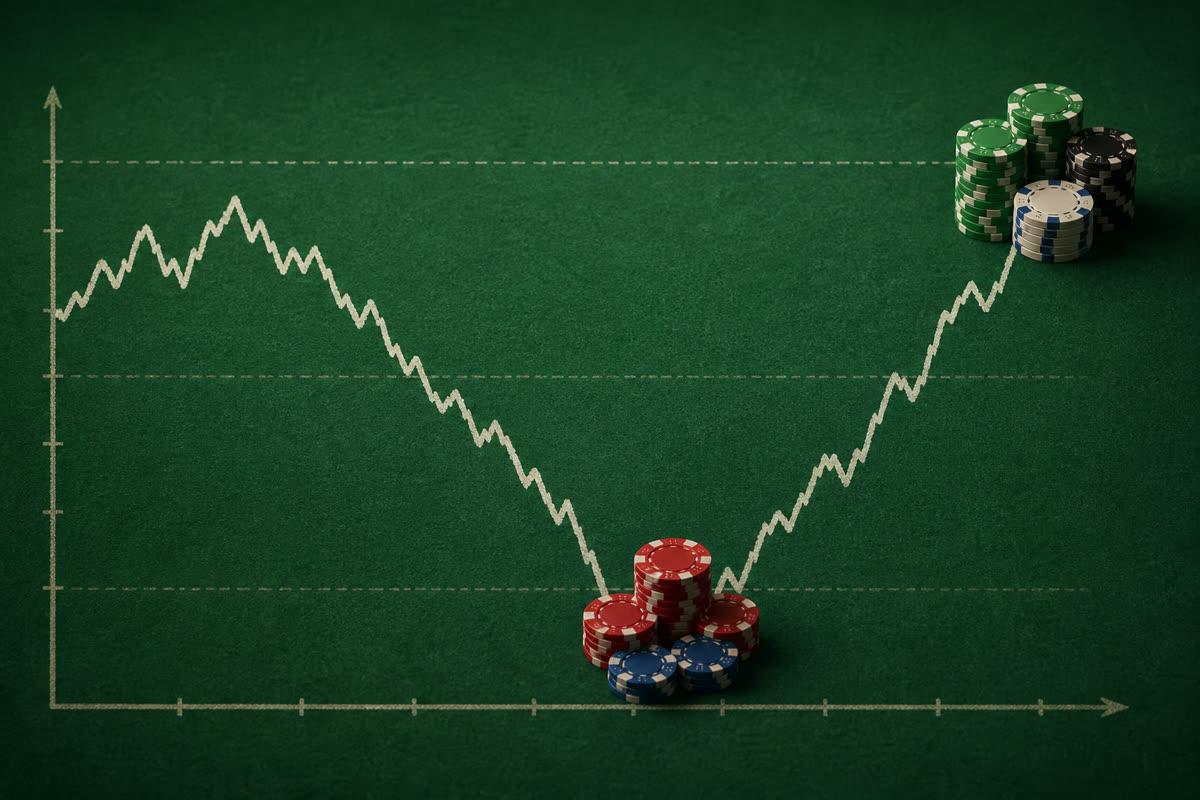
Confidence intervals, sample size, and the ledger math that separates a normal losing streak from a strategy leak — so you fix the right problem after a bad…
More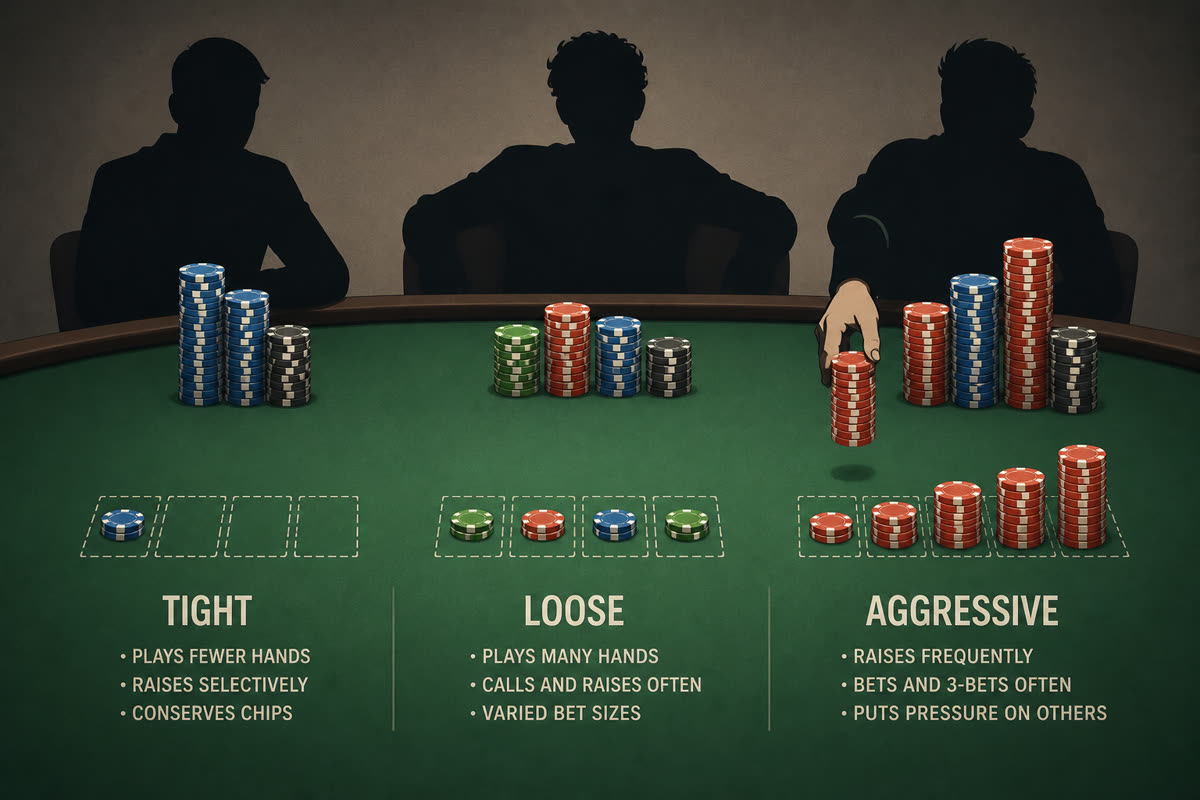
Opening frequencies, showdown choices, and the three labels opponents assign before level two — plus how to install the tag you want instead of the one your…
More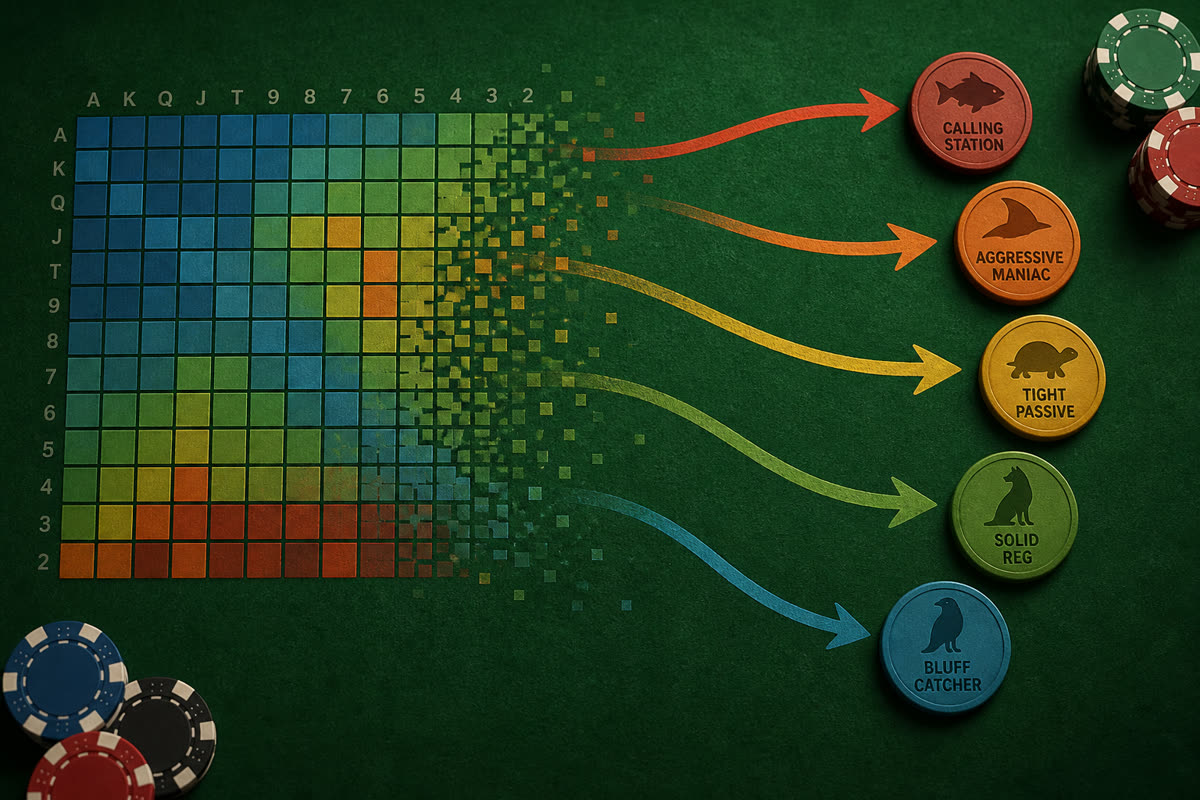
Solver output is a baseline, not a religion — how to learn equilibrium ranges first, then spot the three leaks where real opponents stop resembling nodes in a…
More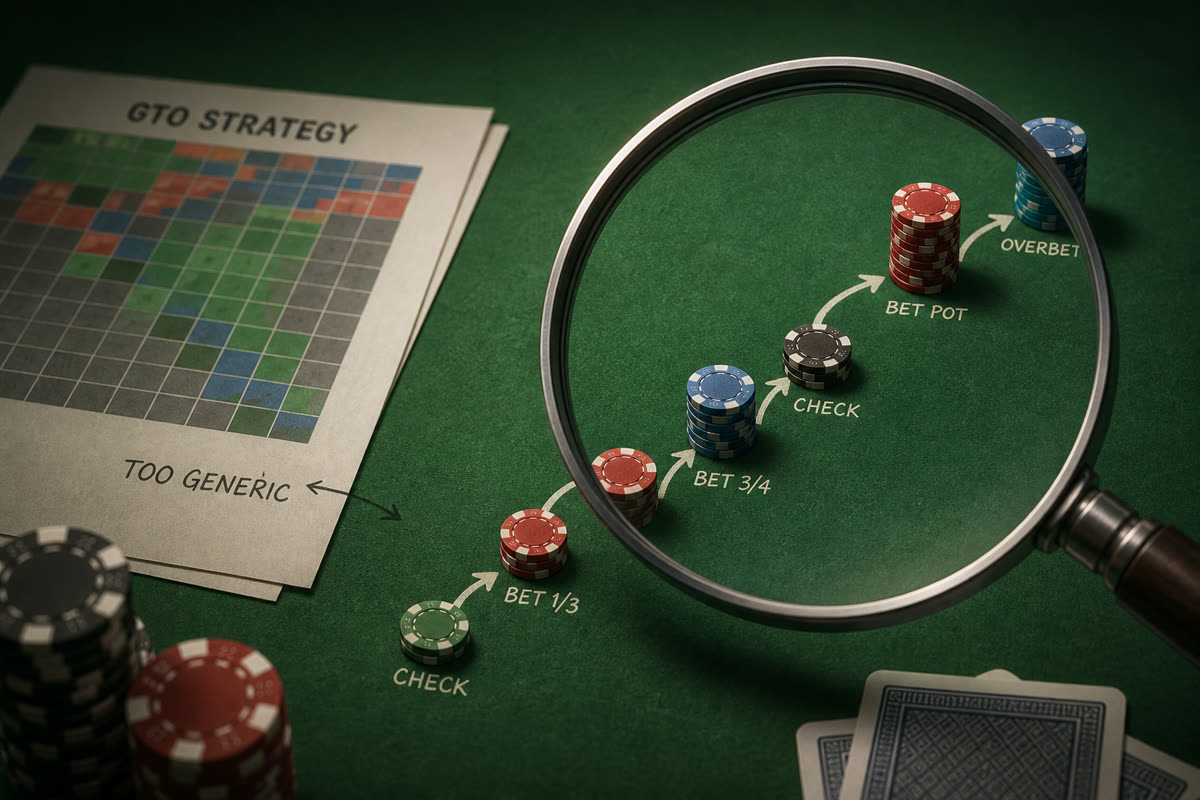
Charts tell you what to do against perfect players. Exploitation tells you what to do against the guy who min-raises aces and over-folds rivers — with a simple…
More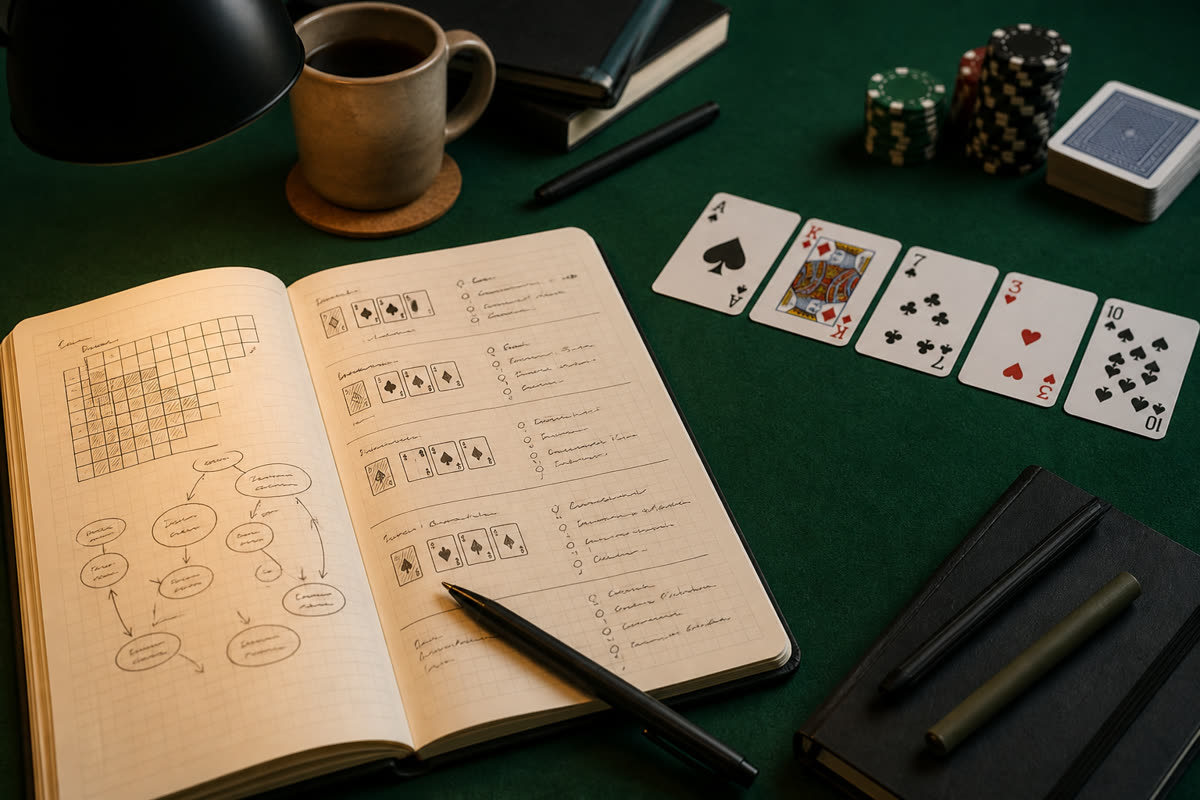
Three flagged hands per session, fifteen minutes max, one spreadsheet column — the review loop that compounds without turning poker into homework.
More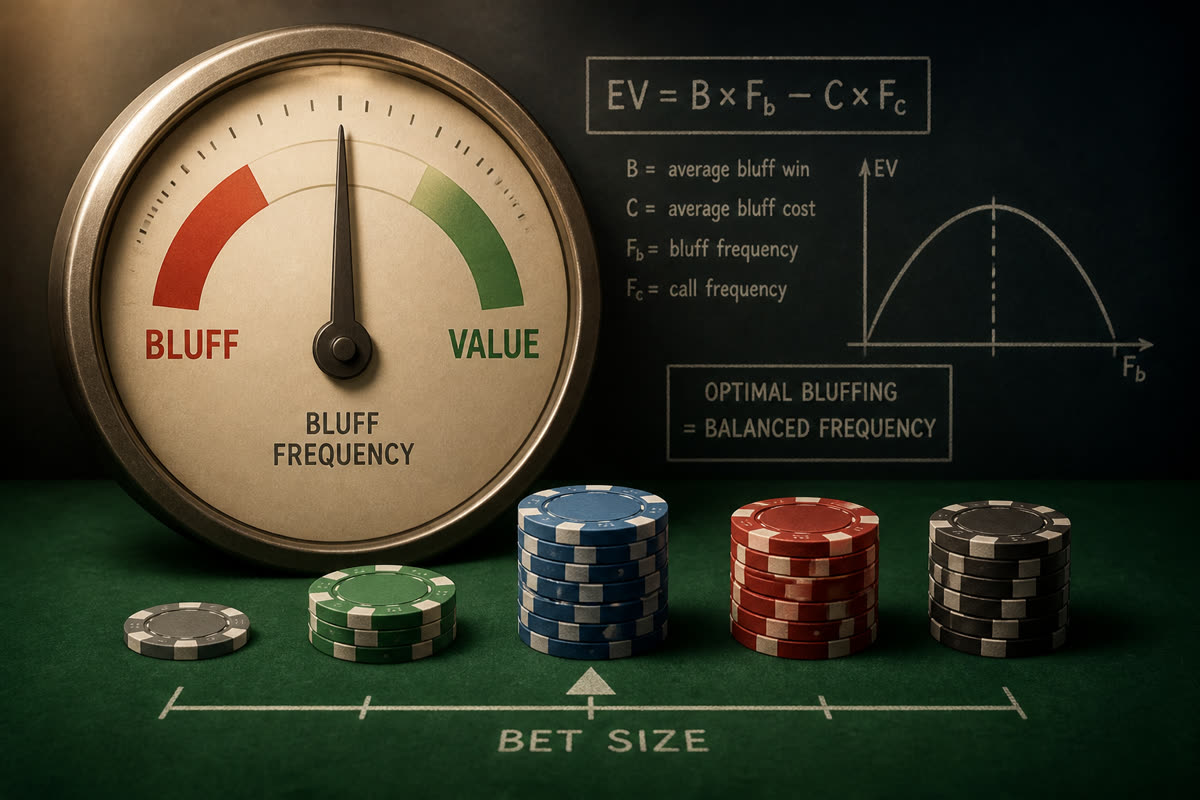
Hero calls get clips — balanced bluff ratios get paid. How to pick bluff candidates by blockers and fold equity instead of adrenaline.
More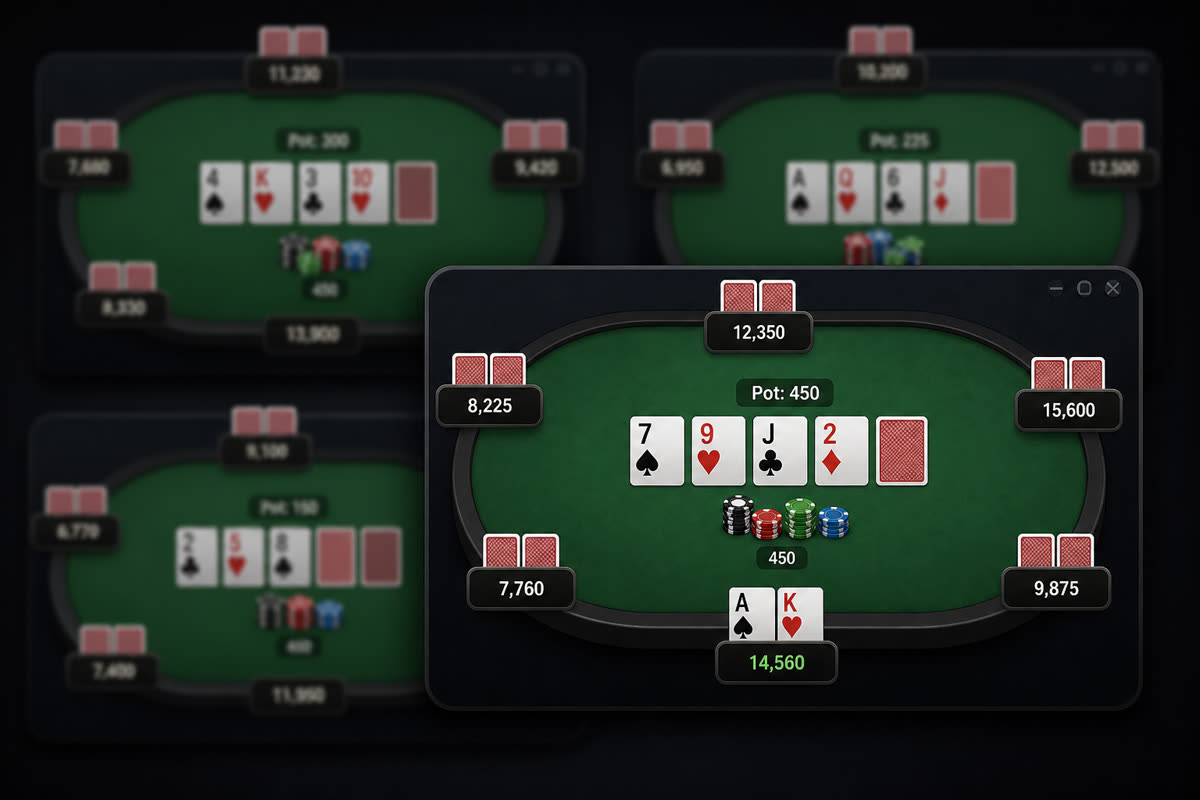
Four tables feels productive; two tables might be profitable. A simple capacity test and layout rules before you add another tile.
More
Two house experts argue whether controlled pressure or chart discipline prints more bb/100 over 50k hands — and when each line is the correct default.
More
Flight schedules, festival fields, and the social tax online cannot replicate — concrete signals that live poker is not a nostalgia trip but a format players…
More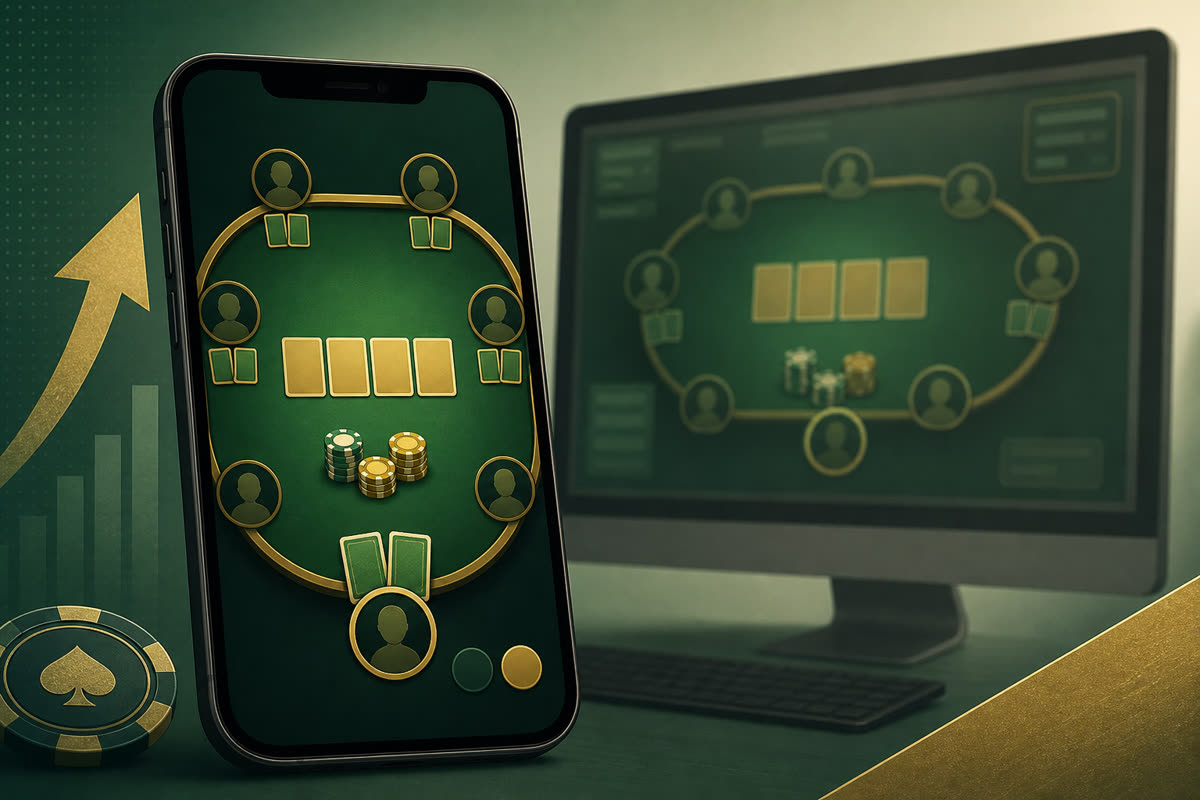
Session length, lobby design, and bankroll friction on phones — why the primary format for new volume is vertical, not «desktop with extra steps.»
More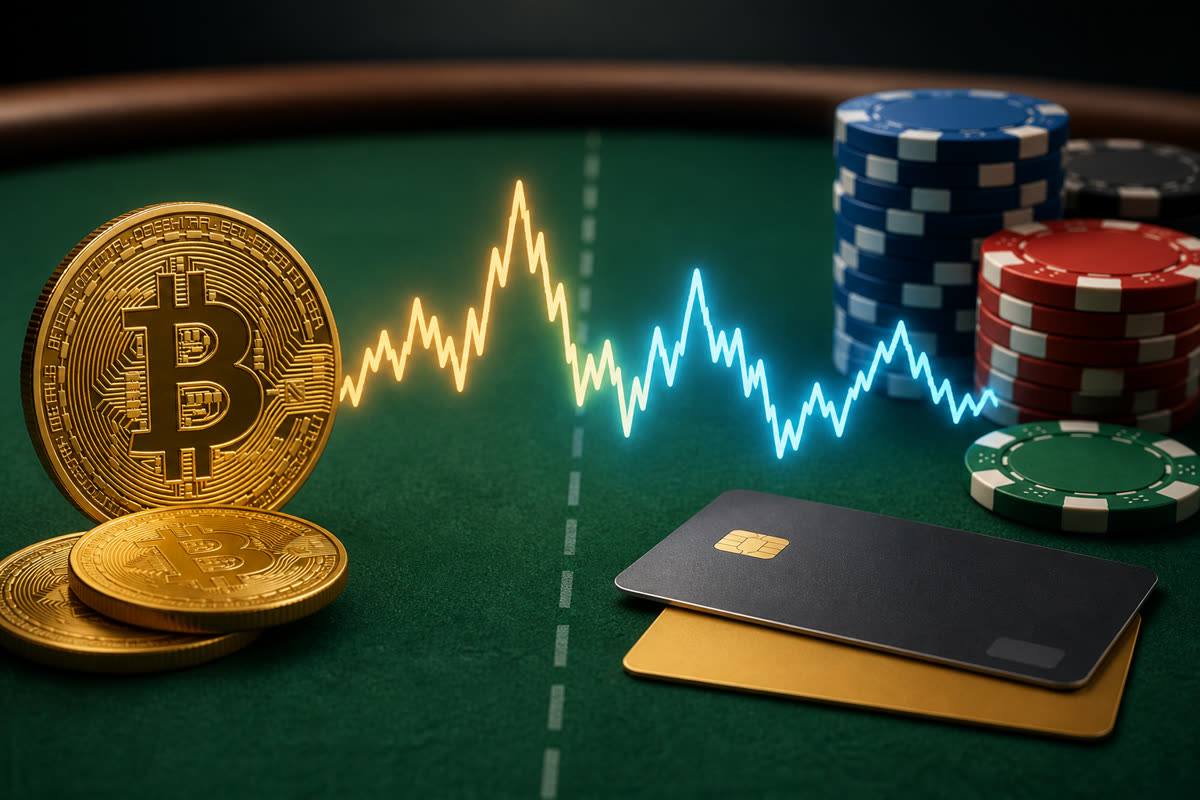
Settlement speed, fee stacks, and the bankroll math when your buy-in floats in BTC or USDT — what actually changed for regs, without exchange hype.
More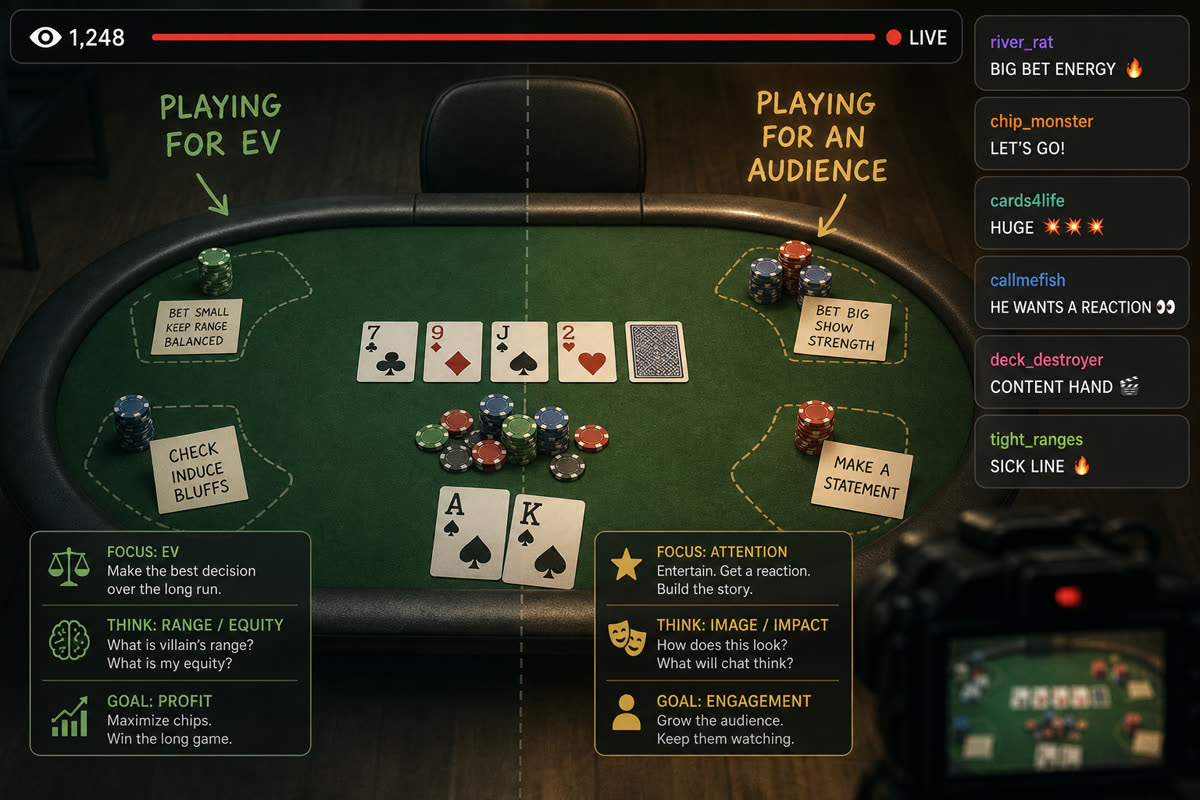
Delay cards, chat lines, and highlight-hand gravity — observable shifts in sizing, bluff frequency, and table talk when every session has an audience.
More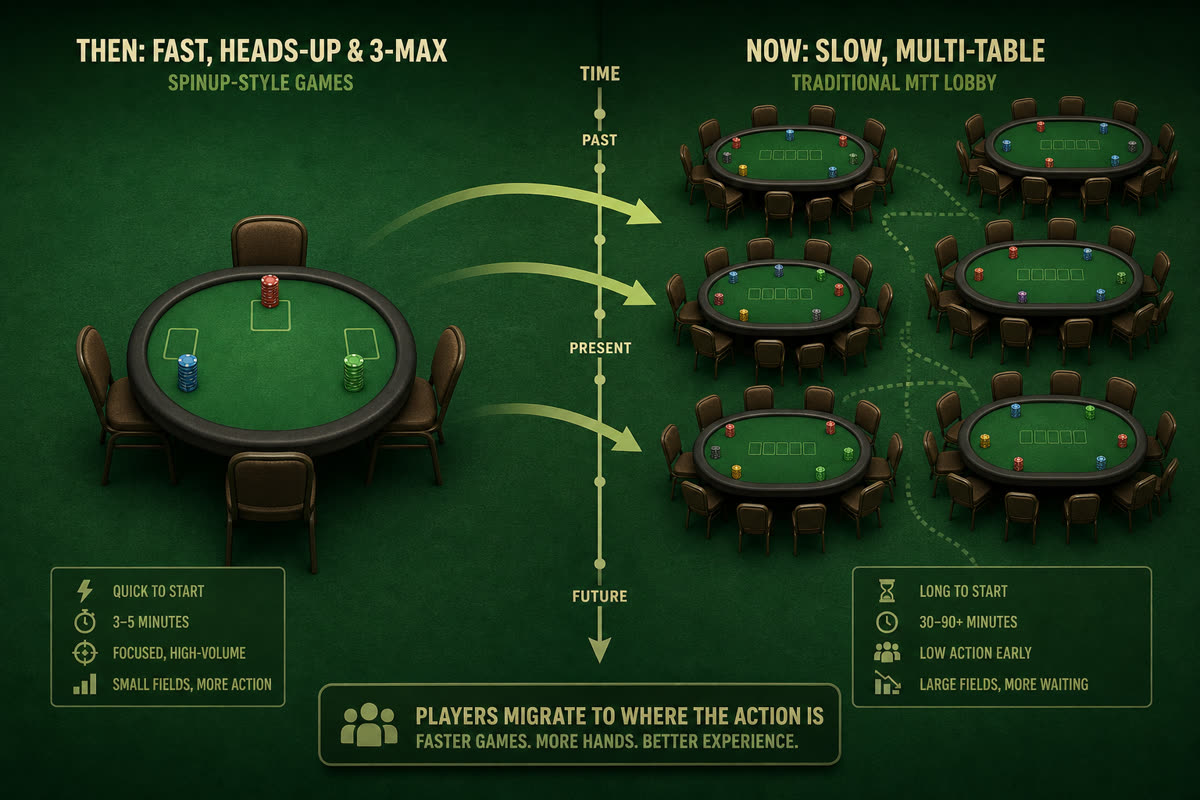
SpinUp-style ladders, AOF tables, and 45-minute tournaments — measurable lobby share growth and what it does to classic MTT fields, structures, and reg…
More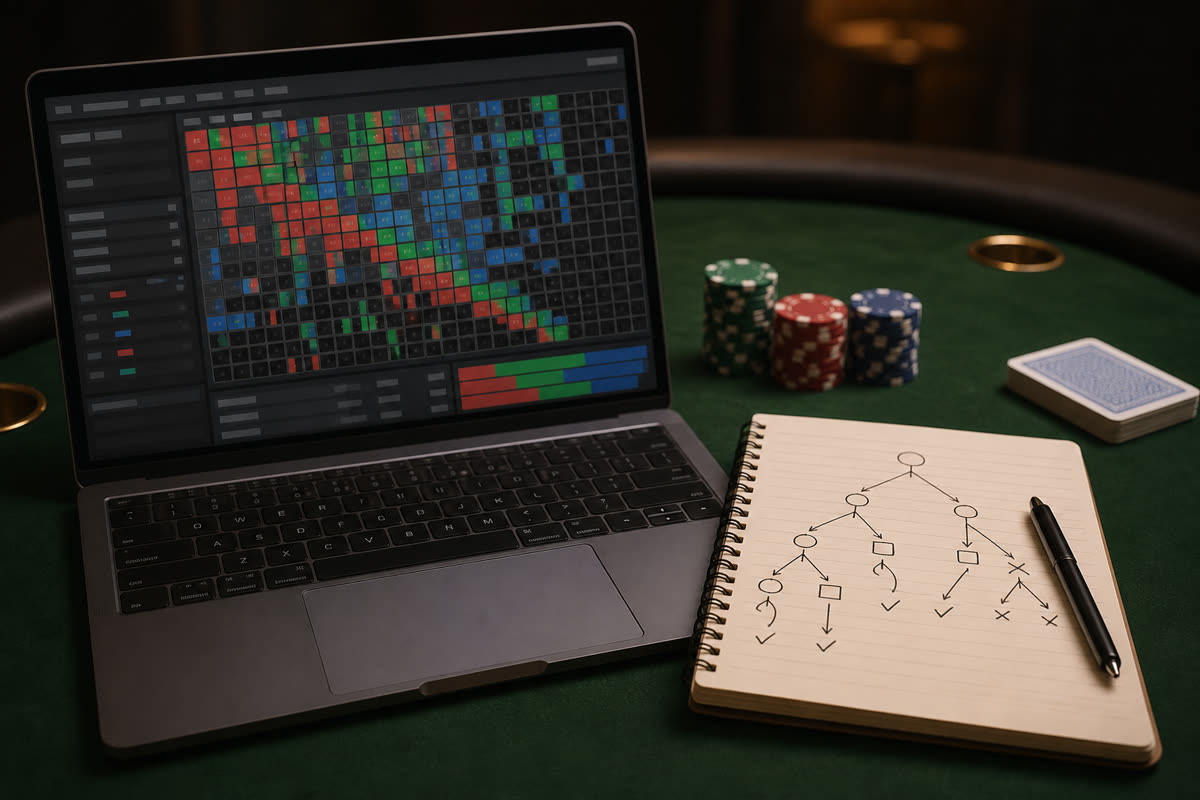
Solver access stopped being a pro-only secret — what changed for everyday players who study one tree a week instead of renting a sim farm.
More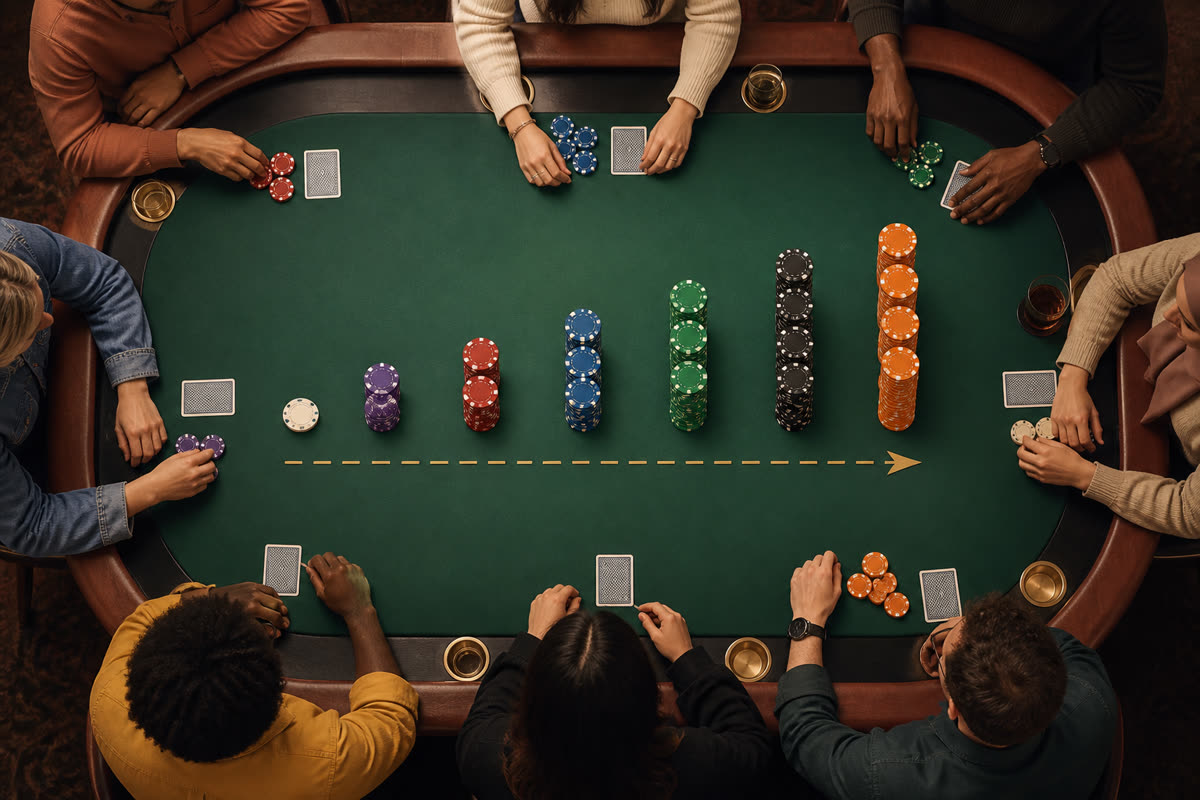
Not a manifesto — observed trends in who sits down, how pools adjust, and what regulars should do differently when the table mix stops looking like a default…
More
License badges are marketing until you read the fine print — segregated funds, dispute paths, and what changes when you move from gray market to regulated cash.
More
Stream layouts, clip culture, and esports pacing are reshaping how poker is packaged — what that means for players who want edge, not entertainment cosplay.
More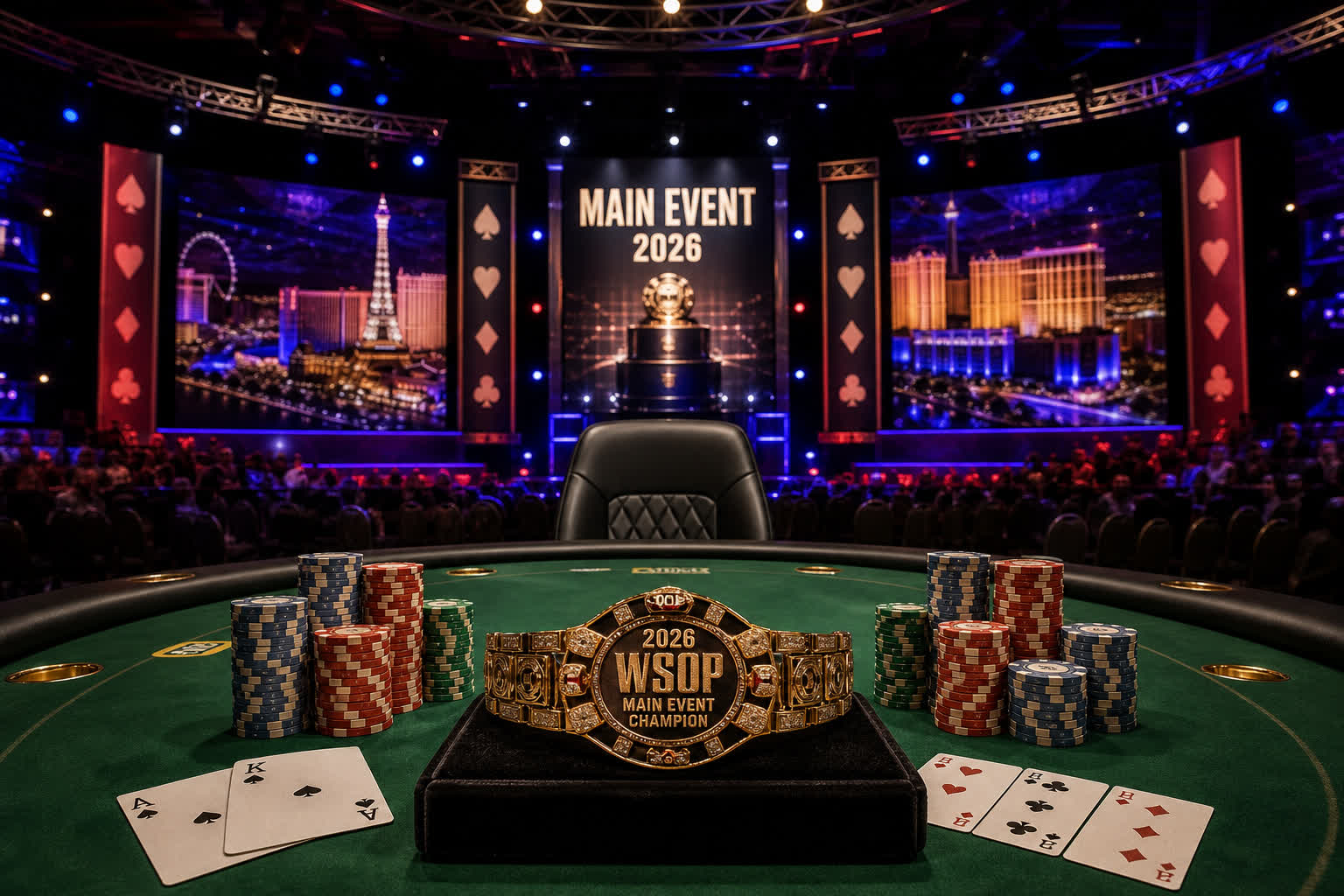
Lucas Jumalon, 22, tops 9,208 entries on August 5 — field size, payout ladder, and the closing hand our Ledger breaks down for MTT grinders.
More
August 16–29 at Casino Barcelona — Main Event, Super High Roller, and the side-event maze Rash breaks down for players planning a trip or sweating from home.
More
September 4–17 in South Korea — 18 pro pairs confirmed August 20, Ivey–Phua on the list, and what the high-stakes circuit expansion means if you are not buying…
More
August 19 — 32 entries, five paid, heads-up vs Ottomar Ladva. Rash on the run that started with WSOP ME 16th and a $268K high-roller second.
More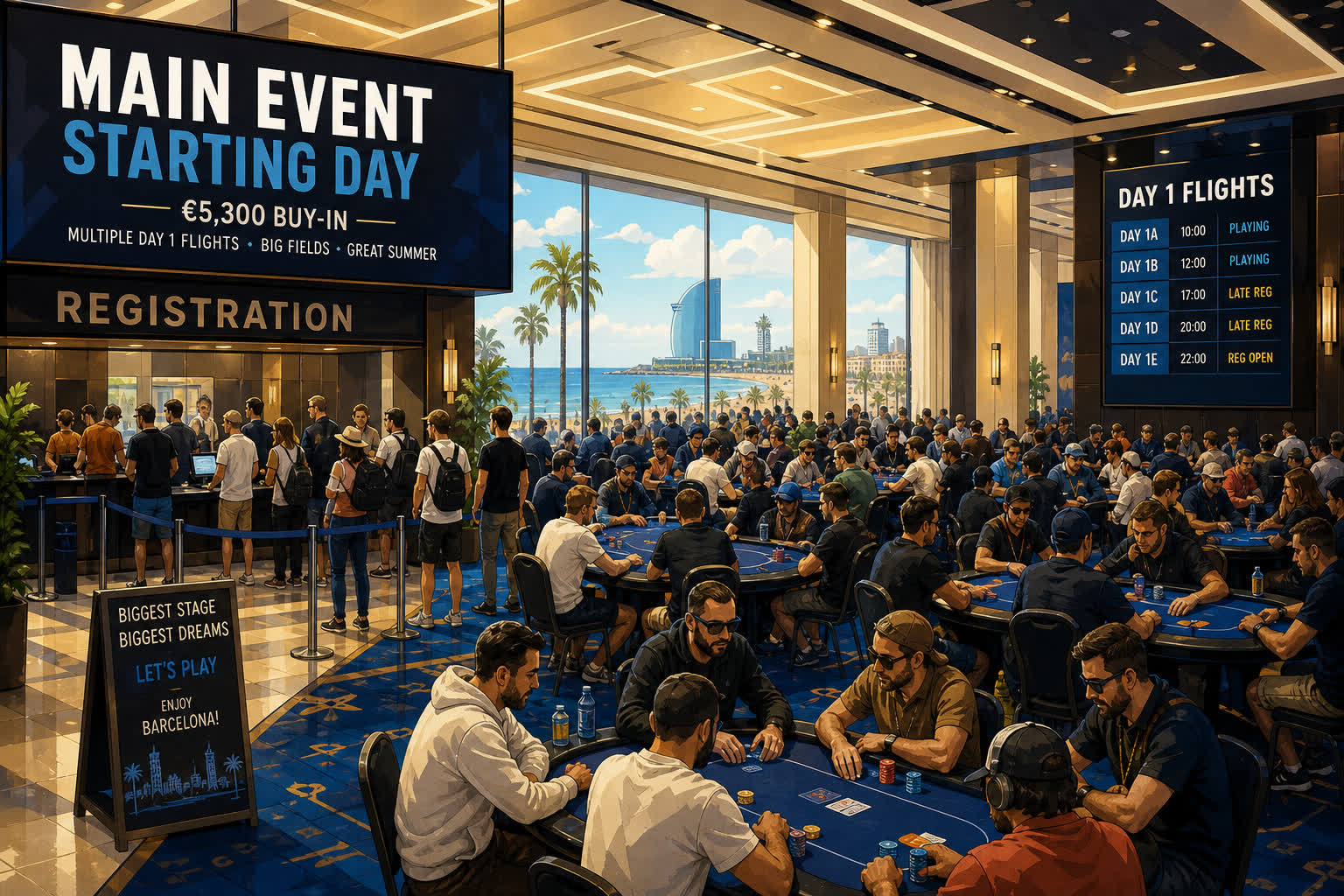
€5,300 flagship, defending champ Thomas Eychenne, final table August 29 — Ledger on satellites, ABI math, and what online grinders should watch.
More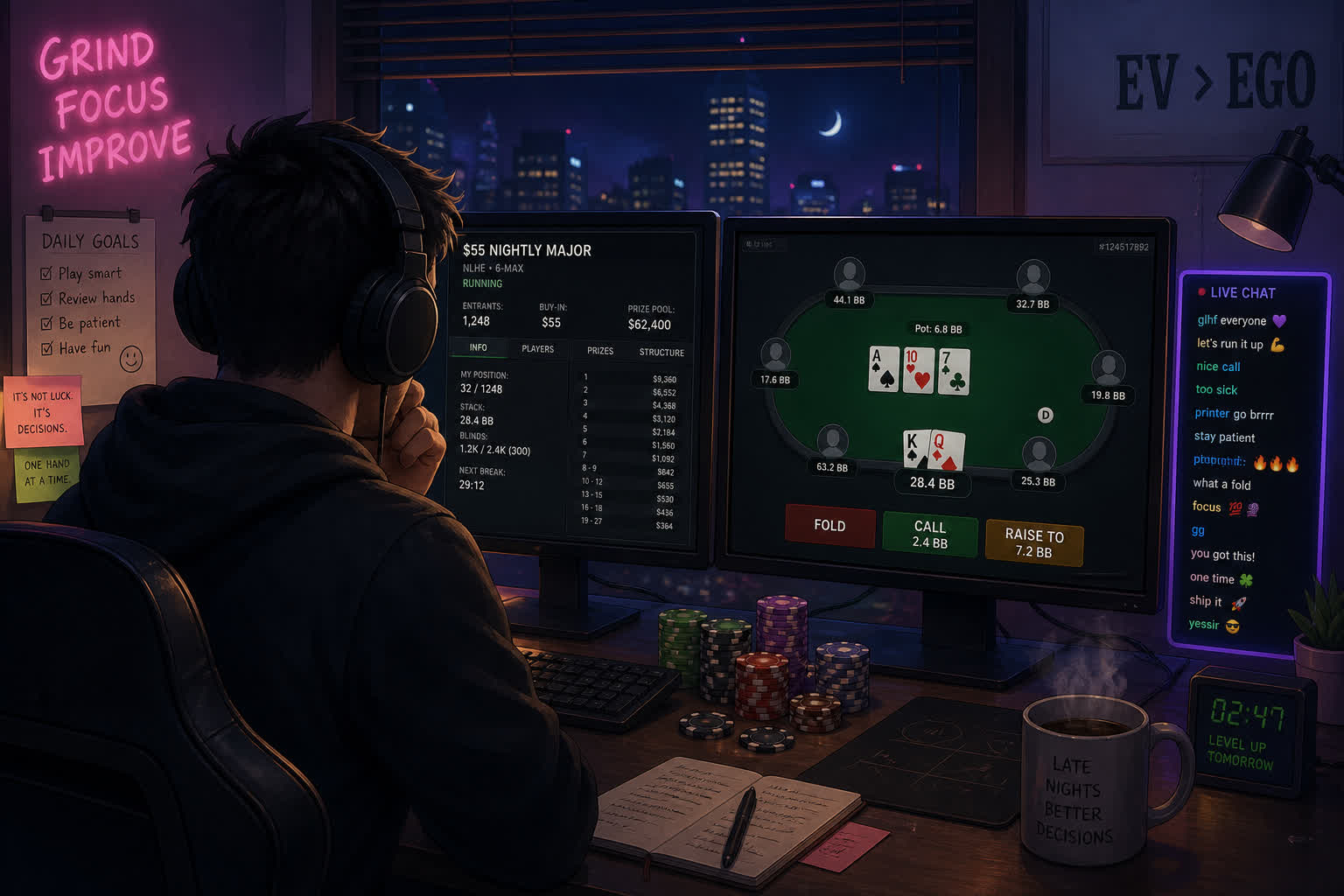
Community news — first room session breakdown, Knockout King on the schedule, and a +$137 NL50 block Rash actually respects.
More
August 20 — 39 entries, six paid, heads-up deal where runner-up Ottomar Ladva actually booked more. Ledger on trophy math vs chip EV.
More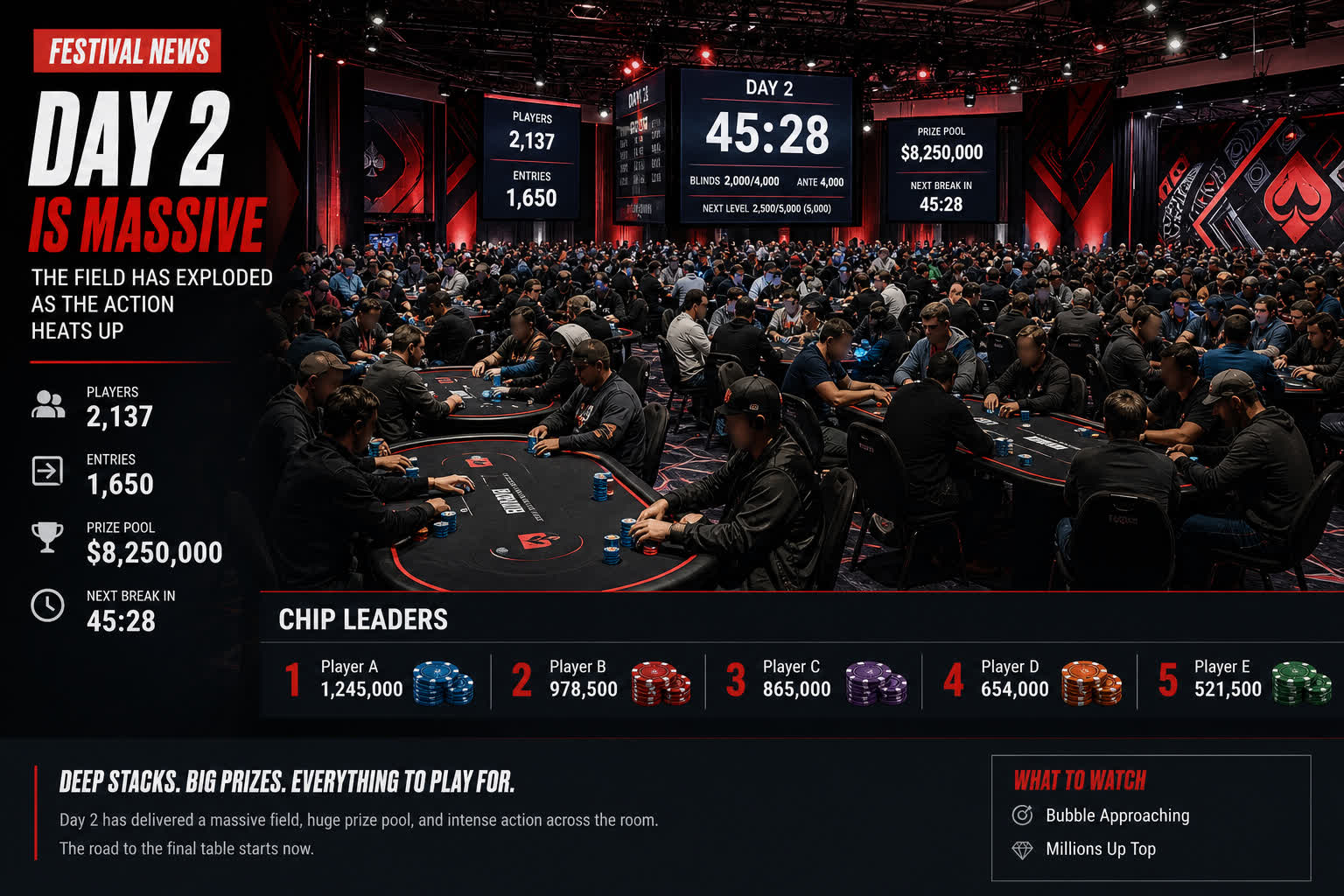
€6.24M prize pool, 648 players left — Rash on the €1,650 monster field and why Jamie Dwan keeps final-tabling everything.
More
August 21–23 at Casino Barcelona — last year's 47 entries, Leon Sturm at €1.45M, and what the SHR window means if your buy-in is $50.
More