
Bluffs that work: frequencies, not courage
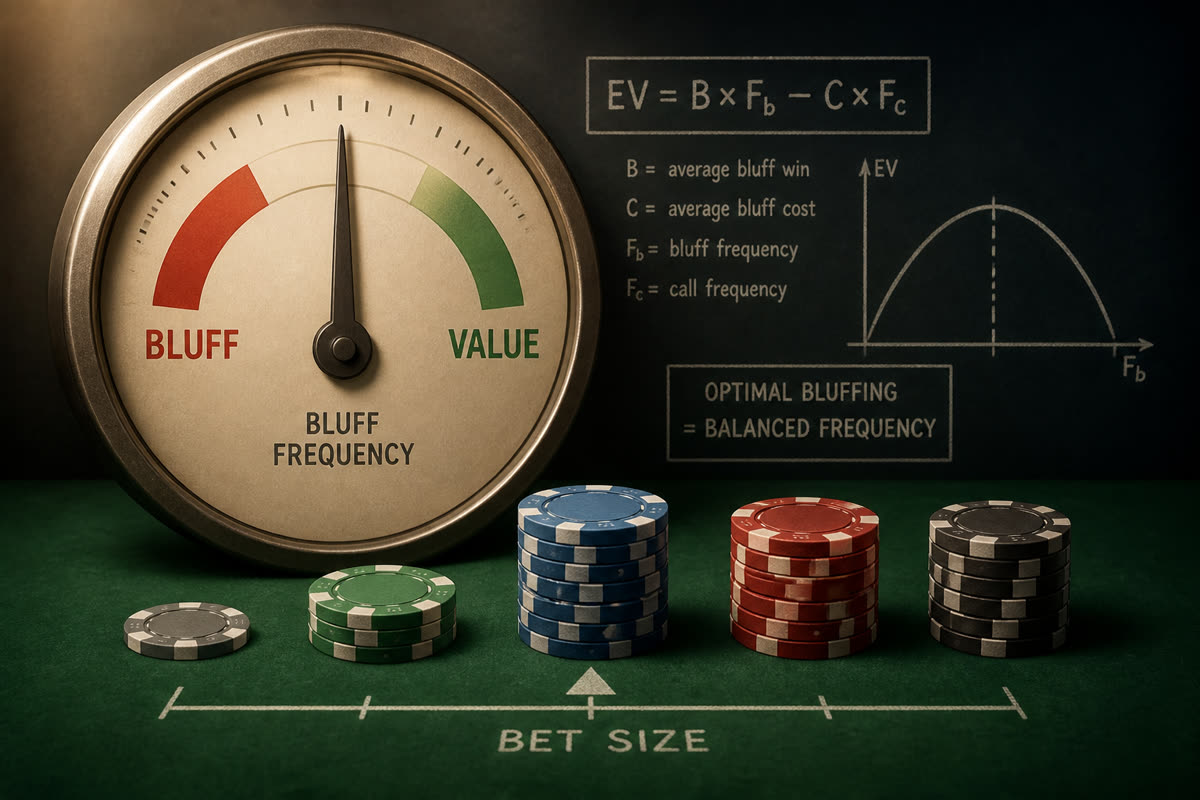
A bluff that works is a counted frequency, not a mood. The bluffs that get paid are counted — a bluff that sits next to value hands, so a call is not free. Bluff because it feels right and the pattern is readable in 40 hands.
Hands that can bluff
Choose a missed draw that blocks a call — A♠ on three spades blocks the nut flush. KQo blocks KQ. 7x on 8-9-T blocks the straight when a middling pair should fold. Air with no blocker is a guess. blockers + fold equity beats a story.
Before the river bluff
Count the value hands
How many nuts/near-nuts are in the betting range? None means the bluff is obvious.
Ask who folds
Villain's WTSD and the line matter more than nerve. Station → skip the bluff.
Pick the size first
A polar board: bet big. A merged board: usually check, not a bluff.
Write the bluff down
Tag B in the note, then review the frequency, not the one hand you remember.
When the bluff comes out
- Villain WTSD > 32% over a real sample means you are paying them to call.
- A scared check on the turn makes the river bluff a capped range, not pressure.
- Board pairs on the river, and you never bet a thin value hand, so the bluff has nothing beside it.
The bluff that looked brave and lost the money
One pot-sized river bet with 9-high looked safe. It lost to second pair and cost $420. The clip collected 2k likes. Over the next 200 rivers the bluffs were 11% of the bets and needed ~14% to break even at that size against that pool. The mood cost −$1.1k across the sample. Matching the frequency got half of it back in a month, with no second clip.
For ten sessions in the NUTS POKER club inside the PPPoker app, mark each river bluff and compare the count with the price of that size. There is no browser table. Cut the bluff against a high WTSD player before you add a bluff you only like. The table pays the count.


