
NLH starting hands: the chart, minus the mysticism

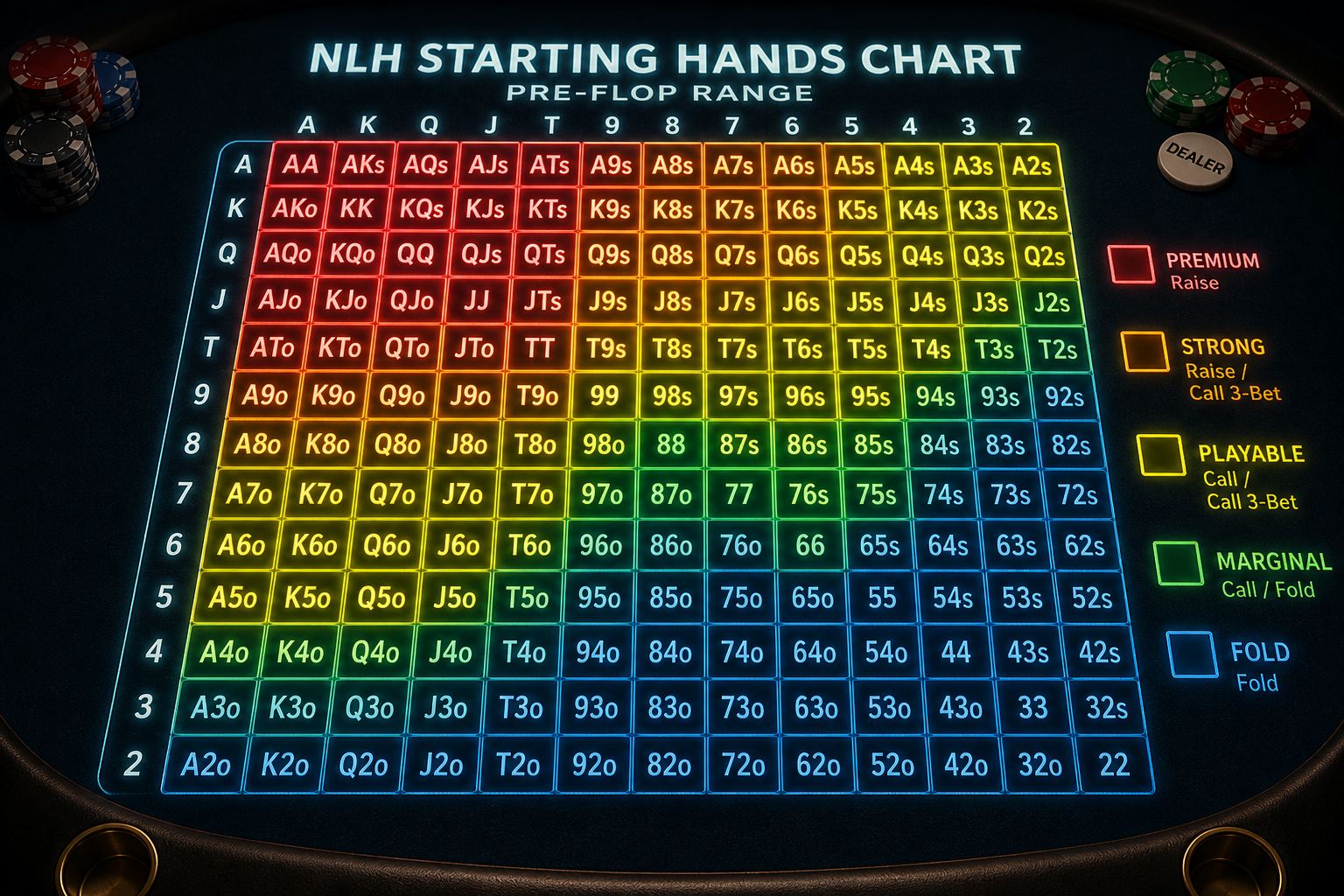
A starting-hand chart does not win the pot. It stops the autopilot from playing hands that lose from that seat. That is the whole use of it.
Why the same hand changes with the seat
The same A♦9♦ is a fold under the gun and a raise on the button. The cards did not change. The number of players still to act did. Fewer players behind you, and the open can be wider. The percents below are a rough 9-max shape, not a solved chart for every table.
Rough opening range by position (9-max)
How to read the 13 by 13 grid
The usual chart is a 13 by 13 grid of ranks. Above the diagonal the hand is suited. Below it the hand is offsuit. The diagonal is the pairs. Once that is clear, the next chart is readable.
- Suited hands sit above the diagonal. Learn that once.
- Pairs sit on the diagonal. A small pair is a speculative hand, not a premium, however it feels.
- Broadway hands look strong and get fragile against a three-bet. Check both before you commit.
When the chart is wrong
The chart assumes an average opponent. A player who limps every hand is not folding to a standard raise of three times the blind, so the range against that player gets tighter. Against a player who folds to any raise, the range gets wider.
Use that shape for a week in the NUTS POKER club inside the PPPoker app, then close the chart. There is no browser table. If you are still reading the grid instead of the three players who matter, the problem is attention, not memory.


