
Diler 6 ko'rsatadi: matematikani baland ovozda hisoblaymiz

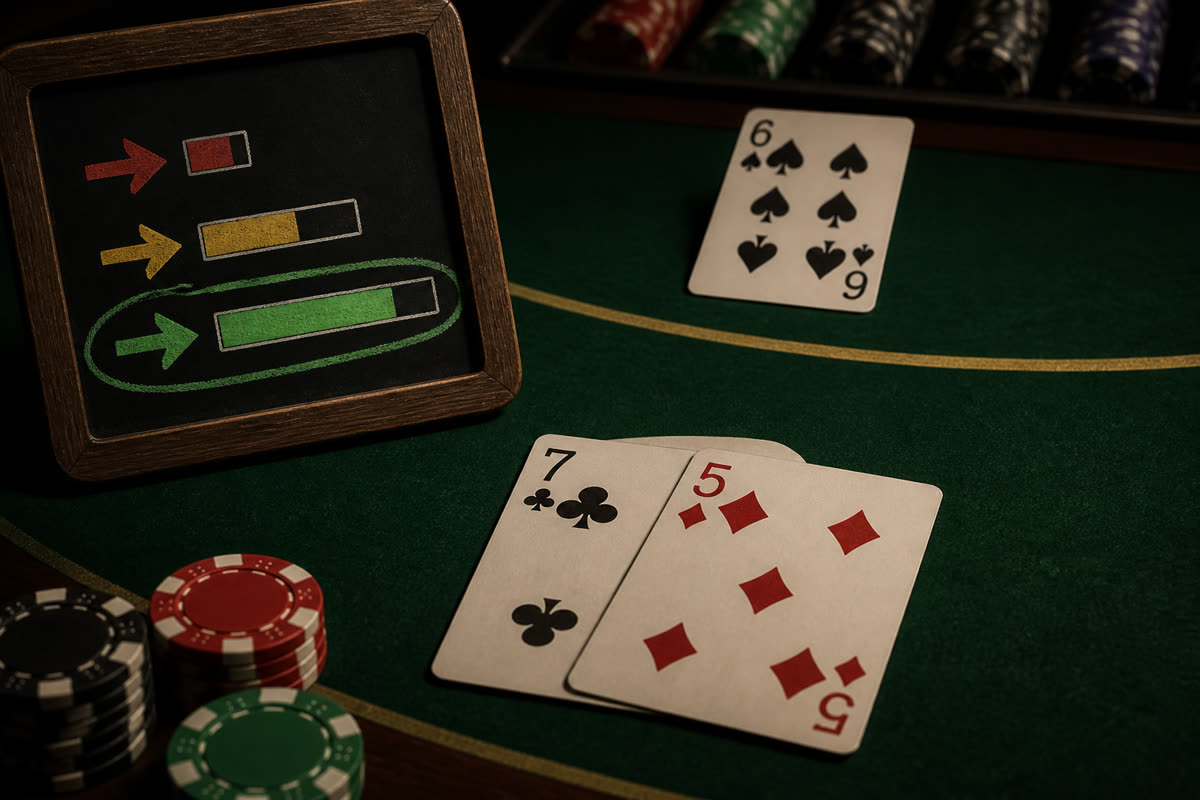
Diler 6 — sukno-dagi eng noto'g'ri tushunilgan karta. Ba'zilar «zaif» deb hamma narsani double qiladi; boshqalar 12 ni hit qiladi. Ikkalasi ham o'lchanadigan xato. Bu tahlil matematikani baland ovozda aytadi.
Ssenari: uch hero, bitta diler kartasi
Tahlil stoli: diler 6. Hero A — qattiq 12 (7-5), Hero B — qattiq 16 (10-6), Hero C — qattiq 11 (6-5). Bir xil upcard — uch xil to'g'ri harakat. Shuning uchun «diler zaif» bitta qaror emas, matrix.
Hero A: qattiq 12 — stand, «tuzatma»
12 vs 6 da hit darhol 31% bust. Stand qo'lning 58% ini yutqazadi, lekin diler bust bo'lganda 42% yutadi — net EV ≈ –0.15 vs hit ≈ –0.23. Stand kamroq yomon. Passiv tuyuladi. To'g'ri.
Hero B: qattiq 16 — xuddi shu mantiq, og'riqroq
16 vs 6: stand EV ≈ –0.11, hit ≈ –0.20. Har ikkala yo'lda ko'p qo'llarni yutqazasiz. Stand equity-ni diler 42% bust bucket-iga yig'adi — o'z totalingizga bust equity sovg'a qilmaysiz.
Hero C: qattiq 11 — double, bitta karta
11 vs 6 double spot: bitta karta, max bet, even money-da EV ~+0.45 unit. Maqsad 21 emas — diler high-bust configuration-da kuchli total (10-value deckda dominant) uchun bir otish.
Diler upcard-ni aniqlang
6 → zaif zona. Reja: stiff (12–16) stand, chart ruxsat bersa 9–11 double.
Qo'lni klassifikatsiya qiling
Qattiq / yumshoq / juft. Qattiq 12–16 vs 6: stand. Qattiq 11: double. Yumshoq 17 (A-6): double.
«Yaxshilash» impulsini rad eting
Hit 12–16 vs 6 bust rate win rate-dan tez o'sadi. Matematika, comfort emas.
Double o'lchamini to'g'ri qiling
Double faqat chart aytsa — 9, 10, 11 vs 6 (9 deck qoidalariga bog'liq). Bitta karta — keyin stand.
12 vs 6 hit qildim, stol «o'lik» edi deb eslayman
Do'stim bilan aynan shu spot — hit, 10, bust, diler 5-10 → 21. Stand «taslim» tuyuldi. Sim 10,000 qo'l: uning chizig'i stand-dan ~8 unit / 100 qo'l qimmat. Qo'l boshiga drama yo'q. Soat boshiga pul.
Tahlil yakuni: bir shoe, bir qoida
6 ko'rsatsa, emotion-dan oldin total-ga qarang: 12–16 stand, 11 double, 10 double (odatda), 9 double mumkin bo'lsa. To'liq shoe deviationsiz — oxirgi «creative» shoe bilan solishtiring. Chart hajm bo'yicha doimo yutadi.
Bu matrix-ni NUTS POKER blackjack-da takrorlang — diler 6, uch hero, bir chart. EV-ni bir marta baland ovozda ayting — 12 da stand taslim emas, arifmetika tuyuladi.


