
NLH boshlang‘ich qo‘llari: mistikasiz chart

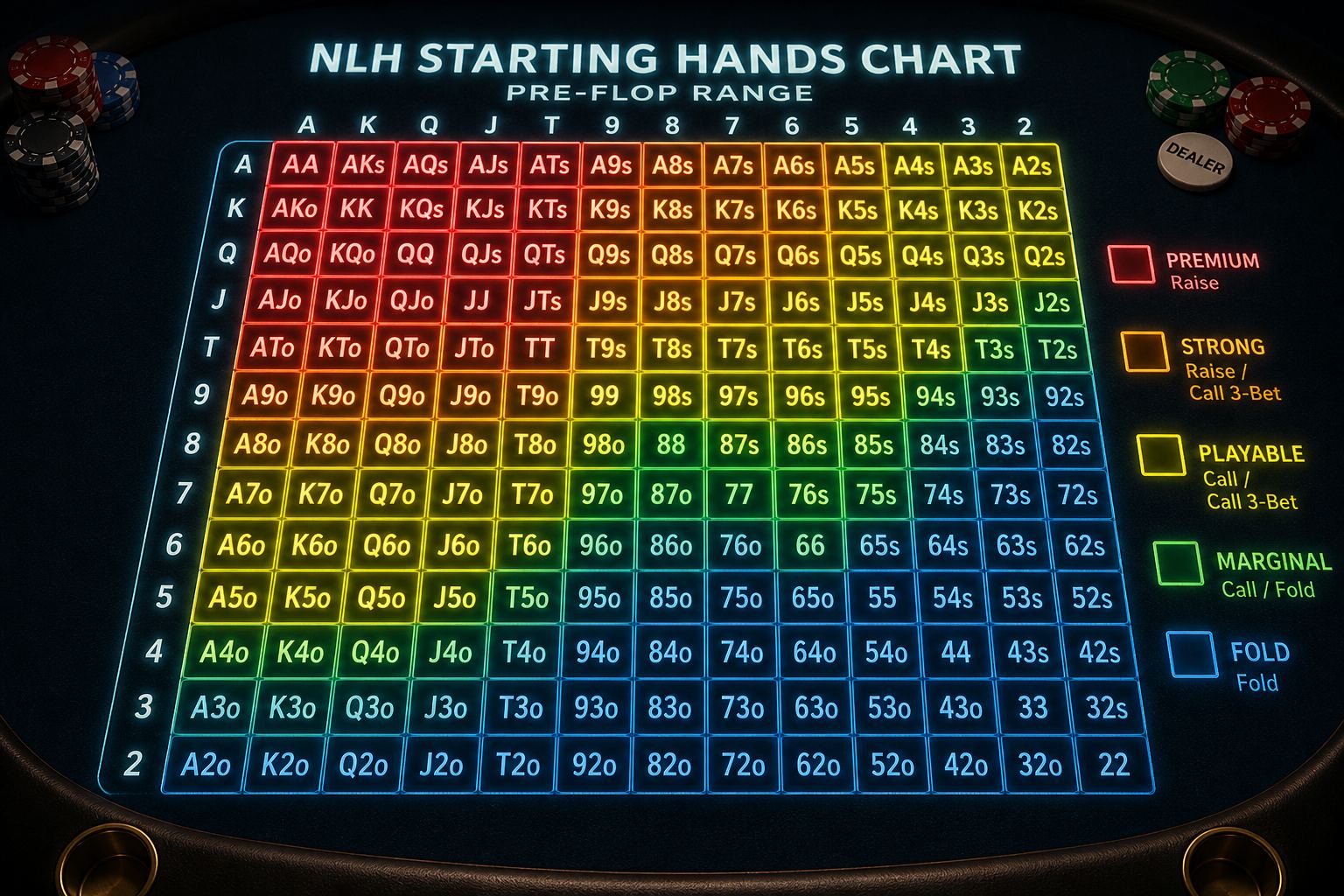
Boshlang‘ich qo‘llar charti sizga pul yutib bermaydi. U pulni avtopilotda boy berishingizga yo‘l qo‘ymaydi. Butun va’dasi shu — hech qanday mistika yo‘q.
Nega pozitsiya butun manzarani o‘zgartiradi
Bir xil A♦9♦ UTG’dan fold, button’dan esa raise bo‘ladi. Karta o‘zgargani uchun emas — sizdan keyin yuradigan odamlar soni o‘zgargani uchun. Ortingizda o‘yinchi qancha kam bo‘lsa, foydali ochish mumkin bo‘lgan diapazon shuncha keng.
Pozitsiya bo‘yicha taxminiy ochish diapazoni (9-max)
13x13 katakni boshni yo‘qotmasdan o‘qish
Har bir chart bir xil 13x13 rank katagidan iborat. Diagonal ustida — bir xil mastli qo‘llar. Pastida — har xil mastli. Diagonalning o‘zida — juftliklar. Shu narsa tushunarli bo‘lsa, keyingi barcha chartlar o‘zini o‘zi o‘qitadi.
- Bir xil mastli qo‘llar diagonal ustida turadi — bir marta yodlang, doim ishlating.
- Juftliklar diagonal bo‘ylab ketadi — kichik juftliklar qanchalik chiroyli ko‘rinmasin, premium emas, spekulyativ qo‘llar.
- Broadway kombinatsiyalari qog‘ozda kuchli ko‘rinadi, 3-bet qarshisida esa mo‘rtlashadi — pul tikishdan oldin ikkala tomonni tekshiring.
Chart xato bo‘ladigan lahza
Chart o‘rtacha o‘yin o‘ynayotgan o‘rtacha raqibni nazarda tutadi. Sizning stolingizda esa o‘rtacha odam yo‘q. Har qo‘lni limp qiladigan yigit standart 3x raise’ingizga fold qilmaydi — demak, unga qarshi “standart” diapazon torroq va qattiqroq, istalgan raise’ga fold qiladiganga qarshi esa kengroq bo‘lishi kerak.
Chartni chop eting, NUTS POKER’da bir hafta NLH cash o‘ynaganda ishlating, keyin olib qo‘ying. Shundan keyin ham qarab tursangiz, muammo xotirada emas — stolingizda aslida muhim bo‘lgan uch o‘yinchini kuzatmayapsiz.


