
GTO insondek: solver qayerda tugaydi va exploit qayerda boshlanadi

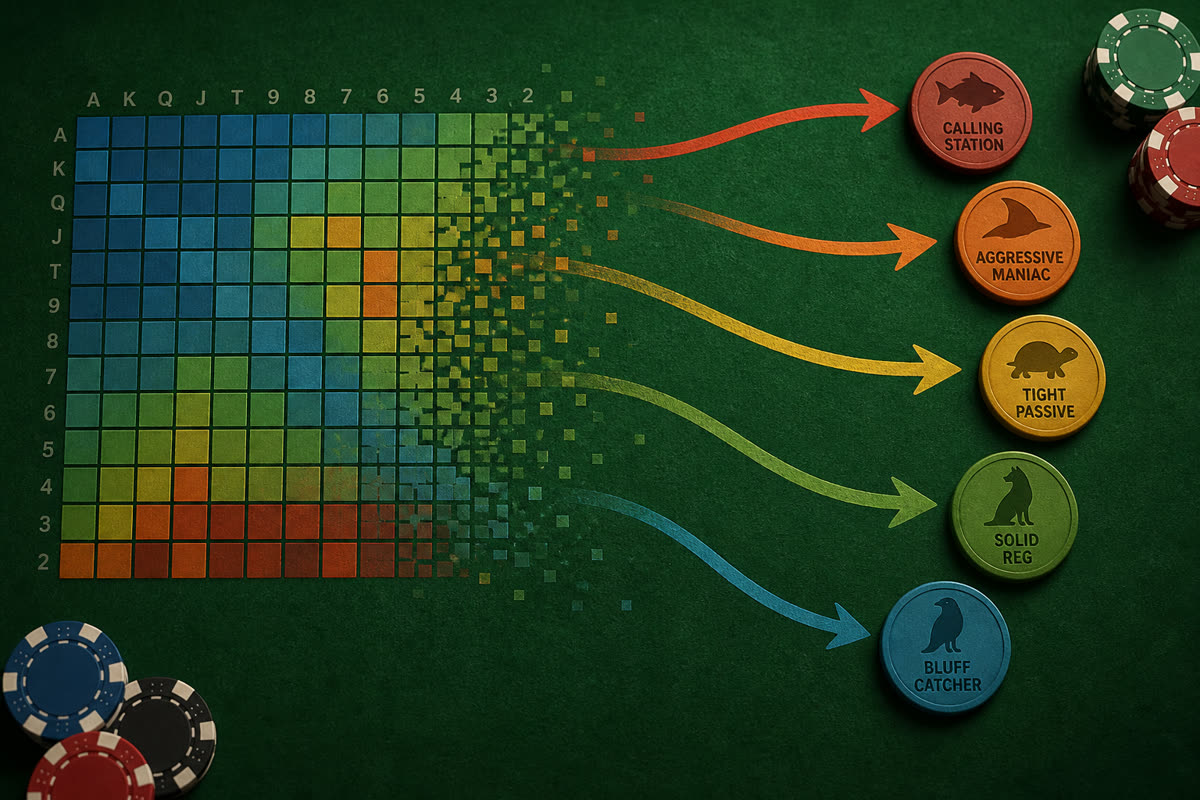
GTO «robot kabi o'yna» demak emas. Bu hech kim leak qilmasa nima bo'lishini ko'rsatadigan xarita — $1/$2–$5/$10 oralig'idagi deyarli har bir stol leak festival. Solver *uncounterable* qanday ko'rinishini o'rgatadi. Exploit to'rtinchi seat-dagi raqib uchun model qaysi taxminining noto'g'ri ekanini ayta olganingizda boshlanadi.
Solver haqiqatan nima beradi
Solver javobi qat'iy taxminlar ostida frequency + sizing + range composition: stack depth, rake, ruxsat etilgan bet size-lar, raqib strategiyasi. Raqib CO dan 40% limp qilishini yoki paired board-da triple-barrel air otishini bilmaydi. Beradigan narsasi — til: river-da 43% himoya qilish kerak bo'lsa, siz 60% fold qilsangiz — balanced bo'lsa ham pul berasiz.
GTO dan uch chiqish yo'li
Preflop width
Pool keng ochadi → chart-dan kengroq 3-bet linear va squeeze. Pool nit → keng steal va flat IP.
Sizing tells
River min-bet = weak yoki block; turn pot = polar. Solver mixed size assume qiladi — odamlar efirda ko'rsatadi.
Showdown tax
Raqib river never bluffs → solver bluff catch pure fold. Never folds → thin value, bluff off.
Sim-da yashamasdan qanday o'rganaman
Haftasiga bitta solved tree — odatda BTN vs BB SRP yoki SB vs BB 3-bet pot — uch frequency export: flop cbet, turn barrel, river bluff. Anonymous pool-lar uchun compliance target. Qolgani note-driven: stat chegarani kesganda (WTSD > 32%, fold to cbet < 38%) — bitta exploit 500 qo'l, keyin adjust.
- Solver first eng ko'p spew qiladigan spotlarda — ko'p regs uchun 3-bet/fold va river bluff-catch.
- Exploit second faqat yozilgan hipotez bilan («1.2× pot-ga overfold»), «fold bo'lganday tuyuldi» emas.
- Re-solve stake o'zgarganda — pool texture ego tan olganidan tezroq o'zgaradi.
Calling station-ga qarshi balanced o'ynaganimni eslayman
«Solver mixes here» deb 800 qo'l bo'yicha WTSD 41% bo'lgan o'yinchiga A-high bilan uch barrel otganimni eslayman. Bir sessiyada ikki marta third pair bilan snap call. Solver line: balanced defense-ga +EV. Real line: shu runout-larda −4.2bb o'rtacha. Exploit — turn check back, river thin value — zerikarli, chop etiladi, foydali.
Bu hafta bitta solved spot tanla, NUTS POKER cash stollarida pool-ga qarshi 20 river decision log qil va raqib range-lari aniq solver node bo'lmagan joylarni belgila. Chart va haqiqat orasidagi bo'shliq — edge; taxmin emas, o'lchov.


