
Պատկերը սեղանի մոտ. ի՞նչ են նրանք մտածում քո մասին առաջին 10 րոպեների ընթացքում:
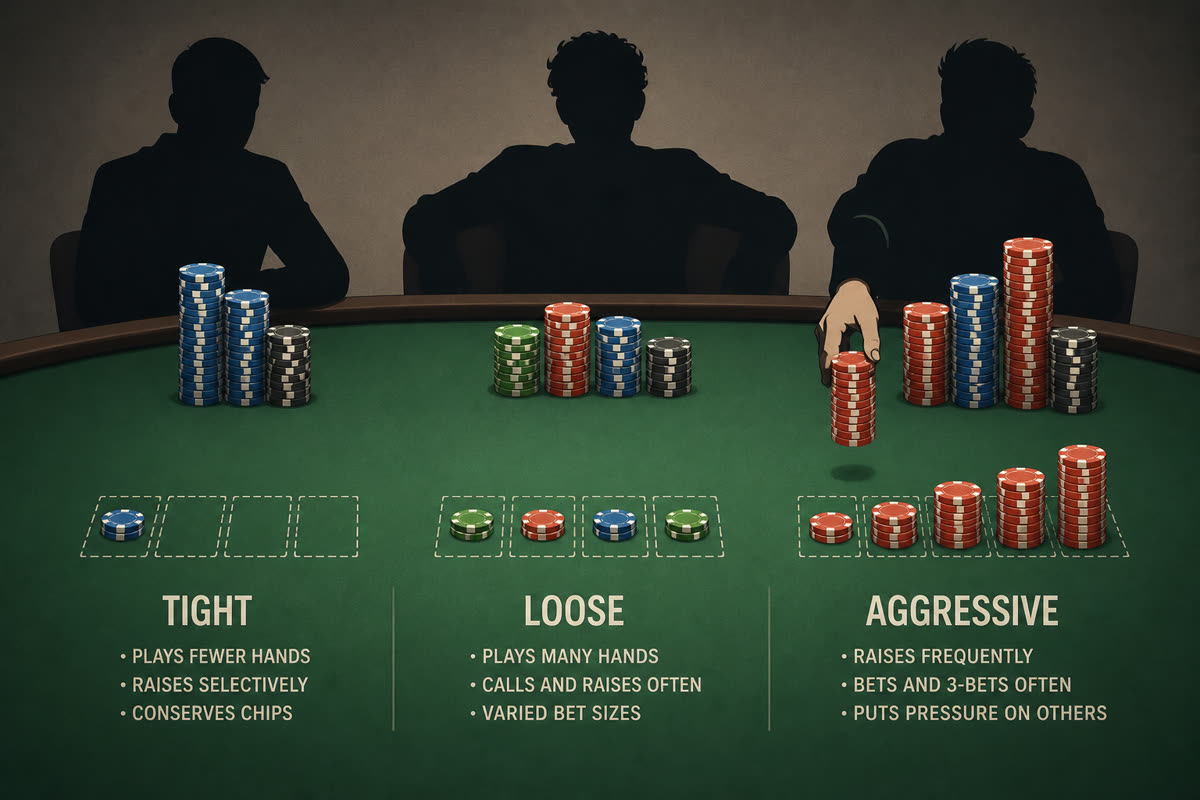
Սեղանի պատկերը բրենդային չէ, այլ խտացված պատմություն: տասը րոպեից կենտները ձեզ նետում են երեք զամբյուղի մեջ՝ nit, station, gro Նրանք հաճախ սխալներ են թույլ տալիս, բայց խաղում են պիտակի տակ, և պիտակը դառնում է իրական EV**, քանի դեռ չեք վերաշարադրել այն:
Ինչ են նրանք նայում (ոչ բիո)
Ոչ ոք չի կարդում փոստը ֆորումում. նրանք նայում են հաճախականությանը բաց, fold to 3-bet, ցուցադրել բլեֆ, թե ոչ: Ցուցադրված բլեֆը գնում է երեք թեթև զանգ ավելի ուշ: Nit fold on button - steal party հաջորդ ուղեծրում: Պատկեր գործարքային - դուք ծախսում եք ձեր ձեռքերը, գնում եք ռեակցիաներ:
Տեղադրման սցենար. առաջին տասը րոպե
Выбери метку
TAG для standard pool; sticky wide vs nit; LAG только с дисциплиной стека.
Orbit 1–2: посев
Одинаковые open sizes — без min-raise roulette. Один size = предсказуемая карта силы.
Orbit 3: плати за метку
Запланируй один showdown — value или controlled bluff под метку.
Orbit 4+: exploitit
Метка зафиксирована — отклоняйся с прибылью: nit tag + river bluff печатает бабки.
Նրանք կոչում են դյուրանցումներ և շահագործումներ
- Nit tag - թեթև 3-bet, barrel fold - գերազանցել thin value և fold equity:
- Կայանի պիտակ — լայն զանգ — արժեքը ծանր, փոքրիկ բլեֆ, մեծ չափս:
- Maniac tag - traps, slowplay - pot control միջին հզորությամբ:
- Պատահական պիտակ — որովայնի զանգ — ոչ ոք չի հավատում; առաջին հաջորդականությունը:
Հիշում եմ «հավասարակշռված» պատկերը՝ ուղղակի խառնաշփոթ
Հիշում եմ՝ բացել 7-2o «հավասարակշռության համար», ծալել 3-bet-ին, որին հետևում է AQ, overbet bluff չոր տախտակի վրա. ամեն ինչ տասներկու րոպեից:_BOLD_____________________________________________. LAG հարգանք — գնվել է կայանային բուժում, երկու անգամ շարված երկրորդ զույգ: Պատկերը բազմազանություն չէ, այլ պատմություն՝ կրկնվող**:
Ընտրեք նշիչ՝ նախքան NUTS POKER-ին վայրէջք կատարելը, գործարկեք երեք ուղեծրով կարգավորումը, այնուհետև շեղեք այն վայրը, որտեղ վճարում է նշիչը: Տասը րոպեն բավական է story-ի համար - գրեք գեղարվեստական, որը դուք վաճառում եք, ոչ թե աղմուկ, որը կենտները գնահատում են որպես __ NUTS POKER** հիշում է ավելի արագ, քան թվում է:


