
Բլեֆներ, որոնք աշխատում են. հաճախականություններ, ոչ թե քաջություն
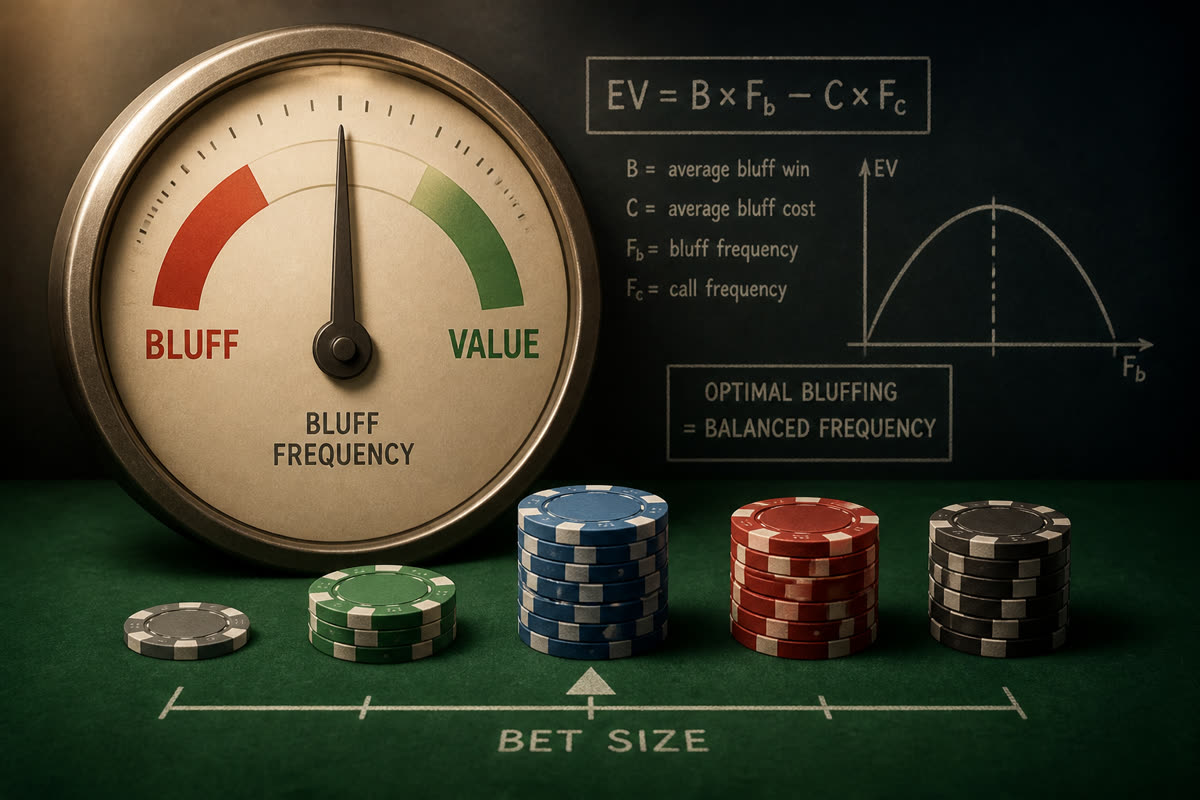
Բլեֆ քաջության վրա՝ բովանդակություն, ոչ թե ռազմավարություն: Տպել planned բլեֆ - բավականաչափ արժեք ունեցող տիրույթի մի մաս, որը հակառակորդը չի կարող շահութաբեր կերպով կտրել: Բլեֆ, երբ «զգում ես», արժեք, երբ «կա» - հաճախականությունները կարելի է կարդալ 40 ձեռքերով:
Ձեռքեր, որոնք ցանկանում են բլեֆ անել
Բլեֆի թեկնածու - բաց թողնված խաղարկություն արգելափակիչներով. A♠ երեք բահով, KQo բլոկ KQ արժեքը, 7x_8-9-T_d_BOLD______________-ին, երբ դա անհրաժեշտ է: Մաքուր օդ առանց արգելափակումների՝ կինոյի համար: Լողավազանում blockers + fold equity հաղթել stories**-ին:
Հաճախականության ստուգաթերթ նկարահանումից առաջ
Считай value combo
Сколько nuts/near-nuts здесь? Ноль — каждый bluff прозрачен.
Оцени fold rate
WTSD и line оппонента важнее бравады. Station → don't.
Size first
Polar spot → big. Merged → часто check вместо bluff.
Запиши bluff
Метка B в notes — разбор частот, не individual glory.
Երբ բլեֆը լիովին անջատված է
- Հակառակորդ WTSD > 32% նմուշի վրա - դուք վճարում եք գովազդի համար:
- Ստուգեք շրջադարձը վախից - գետի բլեֆ = cap rEVeal, ոչ ճնշում:
- Տախտակ զույգեր գետի վրա, բարակ արժեք never - բլեֆ առանց ծածկույթի:
Հիշում եմ քար-սառը բլեֆը՝ երկու հազար լայքերով
Ես հիշում եմ pot գետի վրա 9-բարձր - սեղան «մեռած» - զանգահարել երկրորդ զույգ, −$420, տեսահոլովակ _2k հավանում 200 գետ - թվաբանություն՝ բլեֆ 11%, Ձեզ անհրաժեշտ է ~14% ընդմիջում EVen չափի ընդդեմ լողավազանի: Քաջություն −$1.1k** նմուշի վրա: Խմբագրման հաճախականությունները մեկ ամսվա ընթացքում վերադարձրեցին դրանց կեսը՝ առանց «հիվանդ» բլեֆի:
Նշեք յուրաքանչյուր գետի բլեֆի տասը խաղ NUTS POKER-ում, համեմատեք հաճախականությունը չափի α-թվաբանության հետ, կտրեք բլեֆը WTSD լողավազանում «հերոսի» կրակոցներից առաջ: Աղյուսակը վճարում է հաճախականությունները, այլ ոչ թե դեմքը:


