
WSOP 2026 Main Event: Jumalon başdan sona liderlik edərək $10M götürür

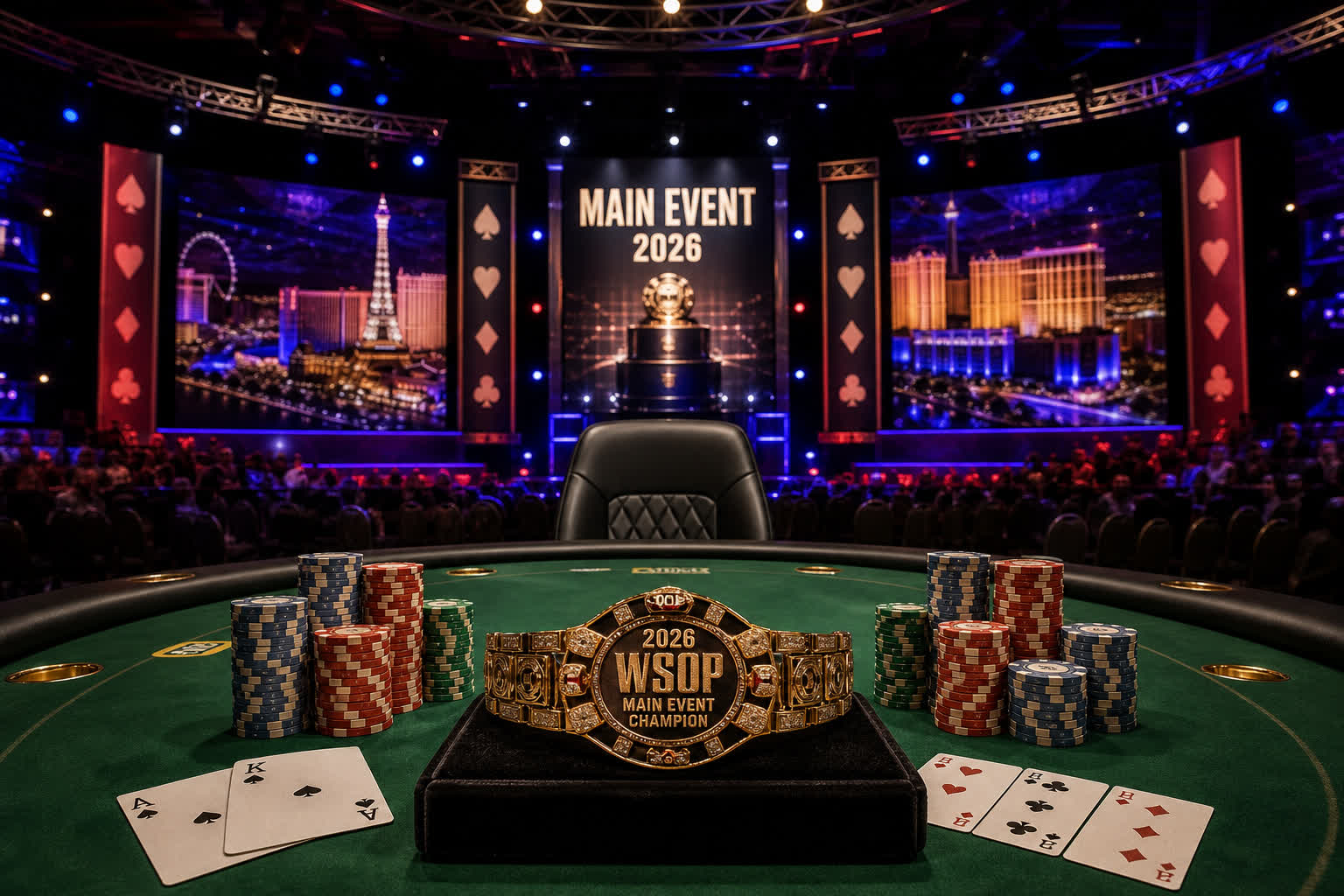
5 avqust 2026-cı ildə Lucas Jumalon World Series of Poker Main Event-i dünya çempionu kimi bağladı — $10,000,000, qızıl brazalet və ilk əldən sonuncuya qədər liderlik etdiyi final stol. Vaşinqton ştatının Spokane şəhərindən 22 yaşlı oyunçu 2 iyuldan ESPN finalinə qədər Horseshoe and Paris Las Vegas-da keçən $10,000 freezeout-da (re-entry yoxdur) 9,208 entry arasında qaldı. İkinci Lauri Saaskilahti (Finlandiya) $6,000,000; üçüncü Greg Mueller $3,750,000 götürdü.
Başdan sona liderlik nə deməkdir
Jumalon 13 oyunçu qalanda liderliyi götürdü və buraxmadı — doqquşlu restartda oyunda ~35% chip, çərşənbə eliminasiyalarına qədər ~38%. Bu təsadüfi şans deyil; final-table leverage-dir: qısa steklər sağ qalmaq üçün chip-ləri liderdən keçirməlidir, orta steklər chip boss ilə hər potda ICM vergisi ödəyir. Saaskilahti yenə heads-up-a çatdı — passiv sağ qalma işləyir — amma payout boşluğu (1-ci və 2-ci arasında $4M) hər all-in-i coin flip deyil, ladder uçurumu etdi.
Bitirən əl (və niyə standart idi)
Heads-up Saaskilahti ace-seven ilə shove edəndə, Jumalon king-six ilə call etdi. Flopda altı və turn-də bir daha — turnir bitdi, brazalet təmin olundu. Bizim oxuma: Saaskilahti qısa steklə geniş call edə bilən oyunçuya qarşı risk etməli idi; Jumalon call-ı bu dərinlikdə dərslikdir. Hero read lazım deyil — yalnız pot odds + fold equity, ikinci yer artıq $6M, birinci $10M olduqda. NUTS POKER-də MTT final stolları oynayırsansa, dərs dar və gəlirlidir: big stack olanda qısa stekin cəhdində ölməsinə icazə ver.
Chip leader təzyiqinin ədalətsiz göründüyü vaxtı xatırlayıram
Tələbəni xatırlayıram: $55 MTT-də min-cash, sonra «kart gedir» deyə $215-ə qeydiyyat. Chip leader-dən 40bb KQ shove — düzgün call, pis runout, bust. Səhv call-da deyildi; chip leader dinamikasının edge-i yeyəcəyi field seçimində idi. Jumalon-un yazısı müsbət ssenari: eyni riyaziyyat, əks runout. Wire-to-wire qələbələr ESPN-də sehrli görünür; kağızda yığılmış kiçik edge-lər plus bir closing call-dur.
Bu həftə bir NUTS POKER MTT oyna və hər final-table qərarına qeyd yaz: «Chip leader, medium, yoxsa short idim?» WSOP 2026 aylarca təkrar baxılacaq — ledger-in maraqlandığı yalnız $10M olmadıqda eyni stack riyaziyyatını tətbiq edib-etmədiyindir.


